Sandringham opened its gates on 1 August 2026, the newest addition to the Sabi Sabi Collection and the newest reserve in the Greater Kruger. It sits at the confluence of four rivers, bordering the Timbavati and Thornybush Game Reserves — ground the Collection’s own managing director calls one of the last pieces of great African bushveld left to find.
“Probably one of the last pieces of great African bushveld part of the Greater Kruger that one could get hold of.”
Rod Wyndham, Managing Director, Sabi Sabi Collection
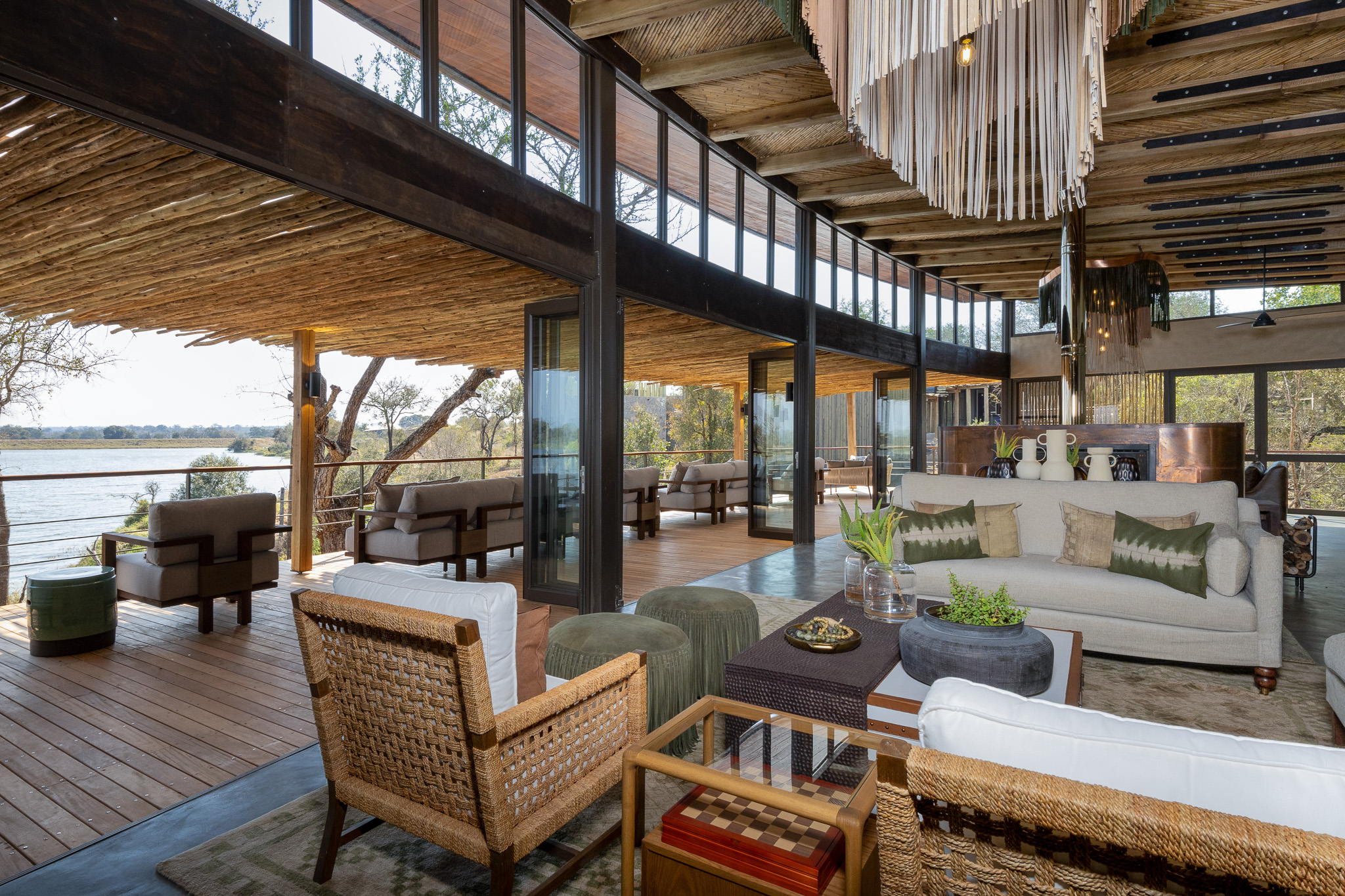
The reserve is built around a large dam on the Timbavati River, and it’s the first thing most guests see. “When you arrive, you are greeted by this massive expanse of water,” Wyndham says, “the views on that river are spectacular.” Shisaka and N’Weti Camps’ suites frame that same water from opposite banks, and the main lodge’s deck runs straight down to its edge.

A Place of Second Chances
Sandringham wasn’t always a protected area. Getting it here took five years of planning and rehabilitation — the Sabi Sabi Collection turned what had been a hunting property into ground where wildlife could return on its own terms. According to the Collection, animals have been drifting back into this part of the Greater Kruger on their own, drawn in by the protection and conservation work already under way.
“It’s been exciting, humbling and rewarding to see wildlife reclaim their rightful place on the reserve as a protected species. Over the years, wildlife has naturally returned to this part of the Greater Kruger because of the protection and conservation efforts here. Not only is the Sabi Sabi Collection now calling this place home, but importantly, so is the wildlife that freely inhabits the space.”
Jacques Smit, Marketing Director, Sabi Sabi Collection
Part of the rehabilitation work runs through people as much as land. Sandringham partners with the Tracker Training Academy, which trains young people from surrounding communities in tracking, and with Bushwise, which trains the next generation of field guides and conservationists. The Sabi Sabi Foundation, the Collection’s community arm, extends the same idea further — training and employment that moves people between properties under one brand.

Design Rooted in Place
Architect Nick Plewman and interior designer Cate Simpson of Reflecting Africa — the team behind some of the region’s best-known safari architecture — designed Sandringham around its setting rather than against it. Full-length windows and folding doors blur the line between indoors and out; the materials (stone, thatch, earthy screed) draw on the colours of the surrounding bushveld and the reserve’s own granitic soil. An elevated timber walkway links the two camps to the main lodge.
The main lodge itself carries the shared spaces: a boma for dining under the stars, a spa, a gym, a wine cellar, a small museum and a bush boutique, plus its own airstrip for guests flying in directly. Back-up power and WiFi run throughout, though signal can drop out during bad weather or when wildlife interferes with the line — a small, honest trade-off for being this far into the bush.

Where to Stay
Sandringham offers three ways to stay, each with its own character.
Shisaka Camp — Tsonga for “nest,” and named for the woven, dome-roofed salas that top each suite — sits within a Tamboti thicket on the banks of a Timbavati River tributary, with views stretching to the Drakensberg. Its eight suites each have a private infinity pool; two larger villas add a second bedroom, king-size beds, a private game-drive vehicle and their own sunken lounge.


N’Weti Camp, also Tsonga-derived (the name refers to how the mountains look on moonlit nights), is a canvas camp of six suites on raised ground, with the same river and mountain views and the same private infinity pools, plus a freestanding bathtub in each suite and a curved deck wrapping the room.


Sandringham House, just upstream from the main lodge, is a 1,100m² exclusive-use residence for up to eight guests across four ensuite bedrooms. Every booking comes with a private butler, chef and host, plus a private safari vehicle with its own guide and tracker — the option for a family or small group who want the reserve to themselves.
At the Table
Executive Chef Dion Von Wielligh built Sandringham’s menus around the same idea of revival that shapes the reserve itself — older cooking methods alongside more contemporary technique, researched from cultures across the region and the wider country.
“Food is not just something you put on a plate. It must have soul.”
Dion Von Wielligh, Executive Chef, Sandringham
Getting There
Guests reach Sandringham by road or light aircraft onto the reserve’s own airstrip, which also connects to the wider Sabi Sabi Collection network — a short flight through to Sabi Sabi Private Game Reserve itself, or on to the Collection’s Claremont Boutique Hotel in Cape Town.

Hero image — Photo: Visual Focus Media, courtesy of Sandringham.