Tag: South Africa

  • Safari Without the Long Haul: Game Reserves Near Johannesburg

    African elephant feeding in Pilanesberg National Park
    Photo: flowcomm / Wikimedia Commons (CC BY 2.0)

    Not everyone who lands in Johannesburg has a week to spare for the Kruger. Maybe you’re in town for business with a weekend bolted on. Maybe you’re starting or ending a longer South African trip in Gauteng and want a taste of the bush before you fly home. Maybe you live in Joburg or Pretoria and simply want to wake up to lions roaring instead of traffic. Whatever the reason, here’s the good news: you do not need to cross the country to go on a proper safari.

    Within a one-to-three-hour drive of South Africa’s biggest city lies a remarkable cluster of malaria-free, Big Five game reserves. Some are close enough for a spontaneous day trip. Others are made for an unhurried weekend in the mountains. Several let you explore in your own car, at your own pace, for the price of a day permit — no guide, no group, no fixed schedule. And because the whole region sits on the high, dry Highveld and its escarpment, you can leave the antimalarial tablets at home.

    This guide walks through every realistic option, organised roughly from closest to furthest: from Dinokeng, the only free-roaming Big Five reserve you can reach in an hour, through the classic volcanic crater of Pilanesberg, up into the malaria-free mountains of the Waterberg, and down to the small family reserves on Joburg’s doorstep. For each, you’ll find honest detail on what to expect, what it costs, when to go, whether you can self-drive, and where to stay — plus a comparison table, a planning section, and answers to the questions travellers ask most.

    Why the reserves around Johannesburg are special

    Two things set this region apart from almost anywhere else you can go on safari, and both come down to geography.

    They are malaria-free. Johannesburg sits on the Highveld at roughly 1,700 metres above sea level, and the reserves around it lie either on this high plateau or along the Waterberg escarpment to the north. That altitude, combined with the dry climate, means the malaria-carrying mosquitoes that trouble the low-lying Lowveld around the Kruger simply don’t establish themselves here. For families with young children, for older travellers, for pregnant women, and for anyone who would rather not take antimalarial medication, this is a genuine and significant advantage. You get the full drama of African big game without a single tablet.

    They are genuinely close. This is not ‘close’ in the relative sense that safari marketing sometimes stretches to. These are reserves you can drive to in a normal car, in a morning, without an internal flight or an overnight transfer. The nearest free-roaming Big Five reserve is about an hour away. The most famous is two-and-a-half. Even the mountain lodges of the Waterberg are a half-day’s drive at most — and several offer a 45-minute charter flight if you’d rather skip the road entirely.

    There’s a third advantage that follows from the first two: many of these reserves allow self-driving in an ordinary sedan. This is a particularly South African way to safari, and it changes the experience completely. Instead of being delivered to sightings on someone else’s timetable, you buy a permit, pick up a map, and set your own pace. You can sit at a waterhole for an hour if the light is good. You can turn around and go back for the leopard everyone else drove past. You can pack your own picnic and make a whole day of it for the cost of a tank of fuel and an entry fee. For confident drivers, it is one of the most rewarding and affordable safari experiences anywhere in the world.

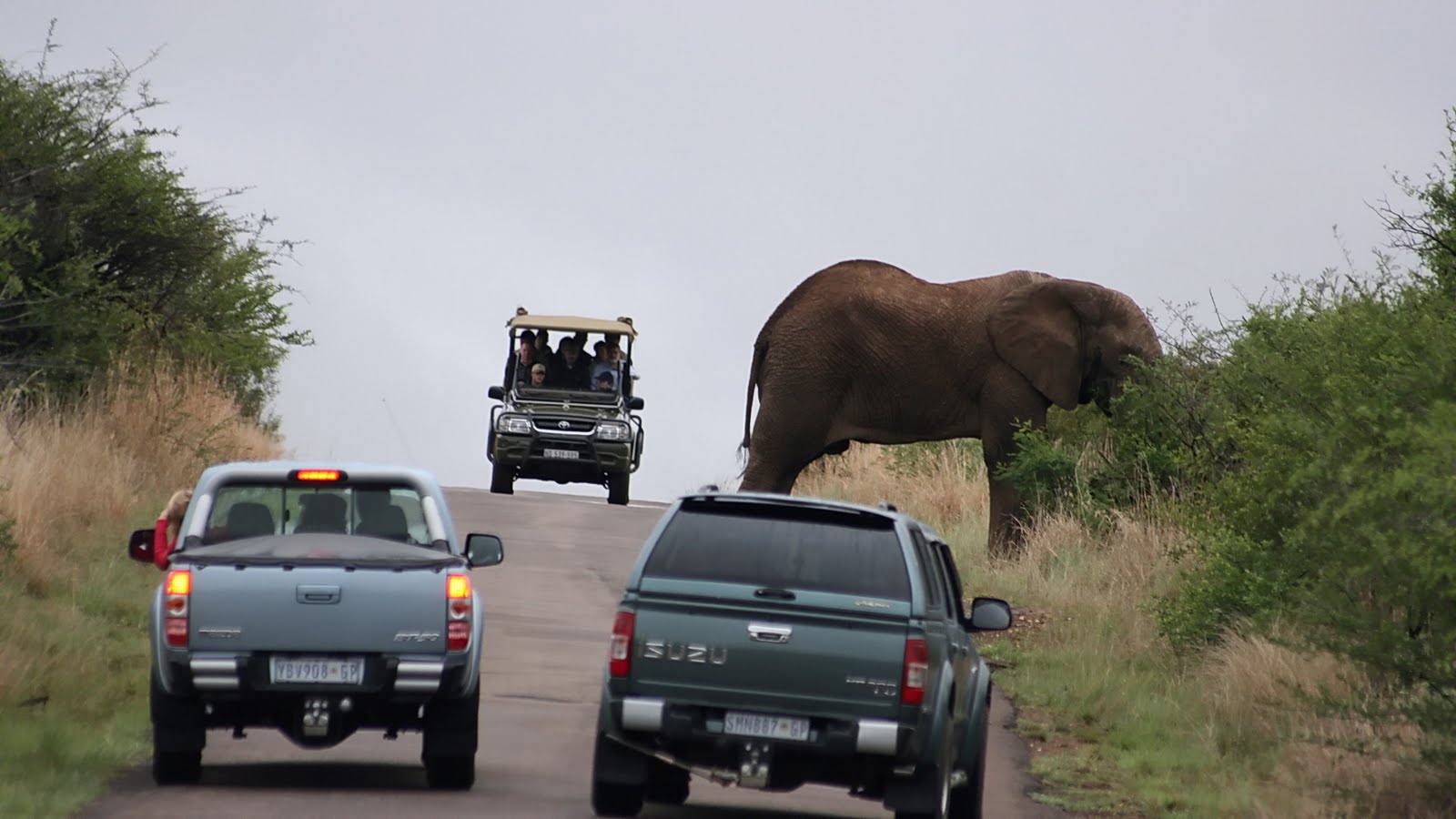
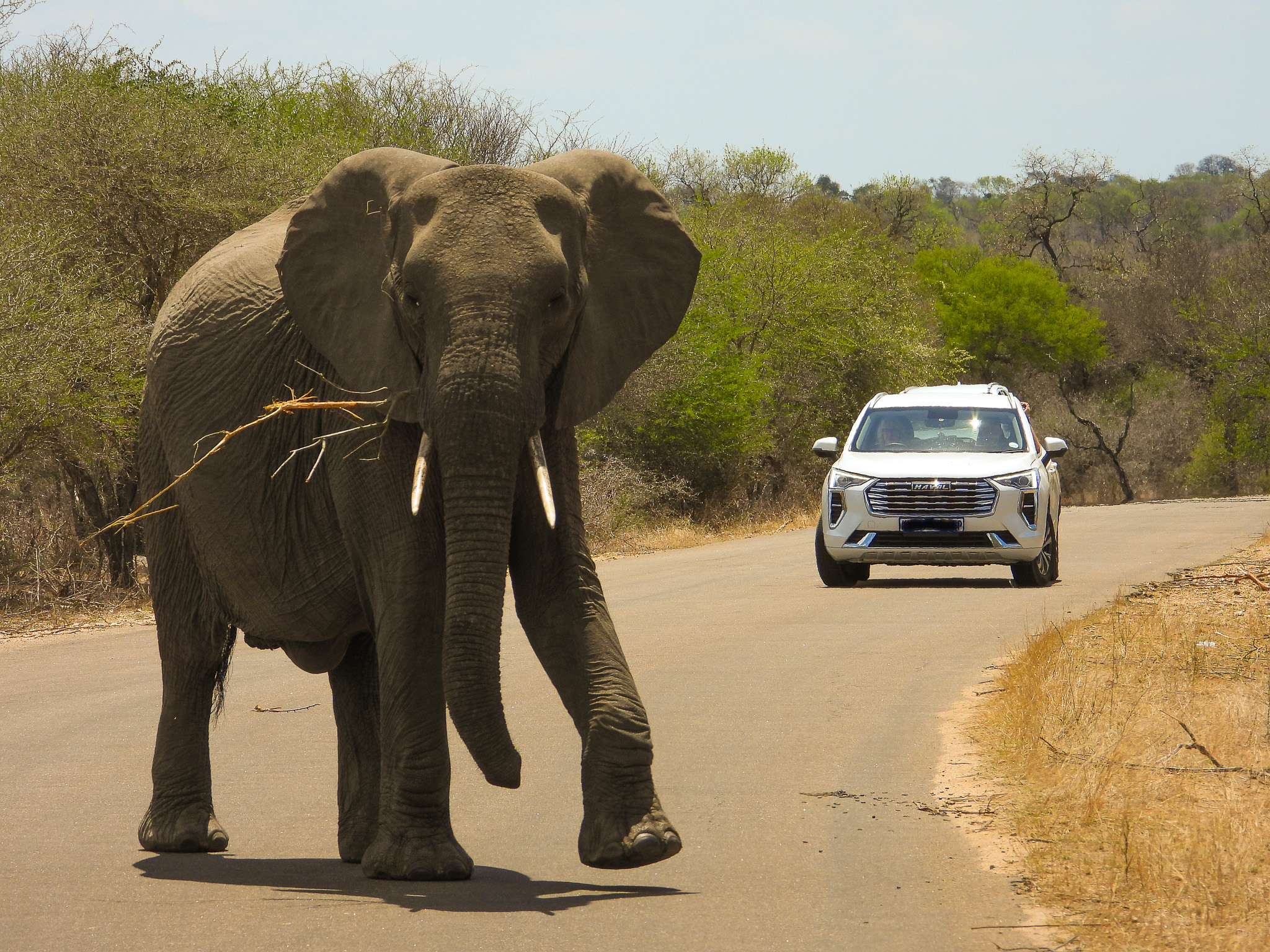
    Private cars and a game-drive vehicle stopped for an elephant crossing the road in Pilanesberg
    Self-drivers and a game-drive vehicle give way to an elephant in Pilanesberg. Photo: Hendrik van den Berg / Wikimedia Commons (CC BY 3.0)

    When to go: the best time to visit

    The reserves near Johannesburg are open and rewarding year-round, but the experience changes markedly with the seasons, and understanding the difference will help you plan.

    The dry winter (May to September) is the classic safari season, and for good reason. As the months go without rain, the bush thins out: grasses die back, trees drop their leaves, and the landscape opens up. Animals are forced to congregate around the remaining waterholes and rivers, which makes them far easier to find and to watch. Mornings are cold — on the Highveld and in the Waterberg, dawn temperatures can drop to near or below freezing in June and July, and an open game-drive vehicle at sunrise is a genuinely chilly experience — but the days warm to mild, clear, blue-sky perfection. Game viewing peaks, the light is beautiful, and because the mosquitoes are dormant, the already-low malaria risk effectively disappears. If your priority is seeing as much wildlife as possible, come in winter and dress in warm layers you can peel off as the day heats up.

    The green summer (November to March) is a different kind of beautiful. Spring and early-summer rains transform the reserves into lush, green country. This is the season of newborn animals — impala lambs, wildebeest calves, and the predators that follow them — and of spectacular birdlife, as migrant species arrive and resident birds come into breeding plumage. Photographers love the dramatic skies and the green backdrops. The trade-offs are real, though: the thick vegetation makes animals harder to spot, the heat can be intense, and afternoon thunderstorms are common.

    The shoulder months (April and October) split the difference — generally good weather, moderate crowds, and a landscape caught between green and gold.

    Whatever the season, the daily rhythm of game viewing is the same. The first two to three hours after the gates open are the best of the day: predators are still active, the air is cool, and animals are on the move. Activity drops off through the heat of midday, then picks up again in the late afternoon as the temperature falls and animals head to water. If you’re self-driving, be at the gate when it opens and plan to be out again from mid-afternoon until closing.

    Panorama of the Pilanesberg landscape inside the volcanic crater
    The volcanic-ring landscape of Pilanesberg. Photo: Prosthetic Head / Wikimedia Commons (CC BY-SA 4.0)

    Dinokeng Game Reserve: the closest Big Five (a true day trip)

    Distance from Johannesburg: about 1 to 1.5 hours (roughly 40 minutes from Pretoria).

    If you want to be watching wild elephants and be home for dinner, Dinokeng is the answer. It is the only free-roaming Big Five reserve in the Gauteng province — the only place this close to the city where lion, leopard, elephant, rhino and buffalo roam wild and unfenced from you — and it is built around the idea of accessible, self-drive, day-visitor safari.

    The reserve and its setting. Dinokeng covers a large tract of bushveld north of Pretoria — sources vary on the exact figure, with around 18,500 hectares commonly cited and some putting the free-roaming Big Five area at up to 21,000 hectares. It officially opened to the public in 2011, which makes it a relatively young reserve, and it’s divided into a northern and southern section with subtly different vegetation: the north tends toward sweeter grasses that draw more grazers, and with them, more predators. Scattered water — including the wetlands around the 30-hectare Mongena Dam — concentrates wildlife and birdlife and gives self-drivers somewhere to park and wait.

    Self-driving and permits. This is the heart of Dinokeng’s appeal. The reserve offers more than 140 kilometres of self-drive tracks, most of them perfectly manageable in an ordinary sedan, and a speed limit of 20 km/h that keeps things slow and watchful. The self-drive area is open daily, typically 06:00 to 18:00. The important practical change in recent years: you now buy your permit online, in advance — payment is no longer taken at the gate. As a rough guide, expect a conservation levy in the region of R75–R80 per adult and R50 per child, plus a once-off self-drive vehicle permit of around R250, with higher conservation rates for foreign visitors. Always check and book on the official reserve site before you set off, as fees and the booking system change.

    What you’ll actually see — an honest word. Dinokeng has all of the Big Five, and on a good day you can see several. But it’s a large area and the animals are genuinely wild and free-roaming, so sightings are never guaranteed — and some visitors leave having seen plenty of plains game (zebra, wildebeest, giraffe, impala, kudu) but none of the big cats. This is the honest reality of a real, unfenced reserve rather than a stocked wildlife park. Come for the experience of a genuine self-drive safari an hour from the city, treat lion or elephant as a bonus, and you’ll rarely be disappointed.

    Staying over and guided options. If a day isn’t enough, Dinokeng has a range of lodges within its boundaries, from the well-known Mongena Game Lodge — around two dozen en-suite rooms, restaurants overlooking a lake, and a full programme of guided morning and afternoon game drives, bush walks and sunset cruises — to smaller camps and self-catering options. A guided drive with a trained ranger genuinely improves your chances with the Big Five, since guides share sightings by radio and know the animals’ patterns, so even committed self-drivers often add one guided drive to the trip.

    Best for: a spontaneous, affordable, self-drive day safari closer to the city than anywhere else — and a great first taste of the bush for nervous or first-time safari-goers.

    The Ndlovu Gate entrance to Dinokeng Game Reserve
    Ndlovu Gate, one of five entrances to Dinokeng Game Reserve. Photo: JMK / Wikimedia Commons (CC BY-SA 4.0)

    Pilanesberg National Park: the classic (day trip or weekend)

    Distance from Johannesburg: about 2 to 2.5 hours.

    If Dinokeng is the convenient option, Pilanesberg is the great one — the reserve most Joburgers think of first when they think ‘safari near the city’, and the one most likely to deliver a full Big Five experience in a single visit. It manages to be both a serious, big-game national park and an easy, self-drive-friendly day out, and that combination is rare.

    View from the Lenong viewpoint over the Pilanesberg crater and Mankwe Dam
    The view from Lenong over the crater and Mankwe Dam. Photo: NJR ZA / Wikimedia Commons (CC BY-SA 3.0)

    A park inside a volcano. Pilanesberg’s setting is genuinely extraordinary. The park — around 550 km², among the largest in South Africa — sits inside the eroded crater of an ancient alkaline volcano, a ring complex some 1.2 billion years old. The result is a landscape of concentric ridges and hills rising sharply 300 to 600 metres above the surrounding bushveld plains, with a central lake (Mankwe Dam) where the crater’s heart would have been. It is one of the largest volcanic complexes of its kind on Earth, and it makes the scenery as memorable as the wildlife — you are quite literally driving around the inside of a long-dead volcano.

    A conservation success story. Pilanesberg as you see it today is the product of Operation Genesis, launched in 1979 — at the time the largest game translocation ever attempted, which reintroduced some 6,000 animals of dozens of species behind roughly 110 km of fencing. Lions were brought in later, in the 1990s, some from Namibia’s Etosha. Today the park holds well over 10,000 large animals, the full Big Five, healthy populations of white and black rhino, elephant, and one of the highest concentrations of brown hyena anywhere.

    Getting in: gates, fees and times. Pilanesberg has five public entrance gates — Bakgatla, Bakubung, Manyane, Kwa Maritane and Shepherd’s Tree — plus a private gate serving the Black Rhino Reserve in the northwest. As a guide to recent pricing (revised from 1 December 2025), daily conservation fees were around R168 per adult and R84 per child for South African citizens, and around R748 per adult for foreign nationals, plus roughly R40 per vehicle. Gate times change with the season:

    • Summer (Nov–Feb): 05:30–19:00
    • Autumn (Mar–Apr): 06:00–18:30
    • Winter (May–Aug): 06:30–18:00
    • Spring (Sep–Oct): 06:00–18:30

    Entry is generally restricted from one hour before closing. Always reconfirm current fees and times before you travel.

    Self-driving Pilanesberg. The park has around 200 km of roads (much of it gravel, plus several tarred main routes) and is comfortably navigable in an ordinary car. Pick up a map at the gate and aim for the loops that locals rate: the Hippo Loop near the central dam is a reliable favourite for giraffe, zebra, warthog and waterbuck; the routes around Mankwe Dam and the Tshepe drive are also productive. The park’s network of bird and game hides is a highlight — the Mankwe Hide, centrally placed near the visitor centre, lets you sit quietly above a waterhole and let the animals come to you, and is rewarding at any time of day. With five hides overlooking waterholes, Pilanesberg is one of the best self-drive parks in the country for patient, vehicle-based photography.

    White rhino cow and calf in Pilanesberg Game Reserve
    A white rhino and her calf in Pilanesberg. Photo: Yoshi Canopus / Wikimedia Commons (CC BY-SA 3.0)

    Where to stay. Options range from the national-park resorts — Bakgatla and Manyane, both offering chalets, safari tents and camping, good for families and self-caterers — to comfortable mid-range and upmarket lodges such as Kwa Maritane, Bakubung Bush Lodge, Shepherd’s Tree, Ivory Tree and Tambuti. Several have floodlit, private waterholes and game-viewing hides at the lodge itself, so you can keep watching after the day’s driving is done.

    The Black Rhino Reserve. In the quieter northwest, the privately managed Black Rhino Game Reserve forms part of the greater Pilanesberg — wildlife roams freely between the two — but offers a more exclusive, lower-traffic experience from its own handful of lodges. It’s worth knowing about if the idea of sharing sightings with day-visitor traffic puts you off.

    Combining with Sun City. Pilanesberg shares a boundary with the Sun City resort complex, with its hotels, golf, waterpark and casino. That makes it easy to pair a genuine Big Five safari with a resort weekend — a particularly good formula for families or mixed groups where not everyone is safari-obsessed.

    Best for: the most reliable classic Big Five self-drive within easy reach of Joburg, and the best single choice if you can only visit one reserve.

    The Waterberg: a malaria-free weekend in the mountains

    Distance from Johannesburg: roughly 2.5 to 4 hours, depending on the reserve.

    When a day trip won’t do and you want to disappear properly into the bush, head north to the Waterberg — a vast, rugged, sparsely populated massif of red cliffs, plateaus and wooded valleys that forms a UNESCO-listed biosphere reserve. It’s malaria-free, beautiful in a way the flatter lowveld is not, and far enough from the city to feel like genuine wilderness while still being reachable in an afternoon. The Waterberg is lodge country rather than day-trip country, and it offers two quite different styles of safari.

    Red-cliff mountain scenery in Marakele National Park, Waterberg
    The Kransberg cliffs of Marakele, in the Waterberg. Photo: Bernard DUPONT / Wikimedia Commons (CC BY-SA 2.0)

    Welgevonden Game Reserve — guided luxury. Welgevonden is a private, malaria-free Big Five reserve of around 36,000 hectares, about a 2.5-to-3-hour drive — or a 45-minute charter flight — from Johannesburg. It is deliberately exclusive: no self-driving, and no day visitors. You stay at one of its small, high-end lodges (most capped at around ten guests — names include Sediba, Tshwene, Clifftop, Rhino Plains and Ekuthuleni) and explore on guided game drives in open vehicles, with expert rangers and limited vehicle numbers at each sighting. The result is an intimate, unhurried, properly luxurious safari, with the full Big Five plus brown hyena, cheetah, and more than 300 bird species. Nightly rates reflect the exclusivity — typically from around R8,000 per person sharing, all-inclusive — and the cheaper months tend to be the winter dry season. This is the choice for a special-occasion, hands-off weekend.

    Marakele National Park — self-drive and scenery. At the other end of the spectrum, Marakele is a SANParks national park in the heart of the Waterberg, and it’s superb value. It holds all the Big Five (concentrated in the larger eastern section), set against the dramatic red cliffs of the Kransberg, and it’s home to the world’s largest breeding colony of Cape vultures — around 800 pairs — viewable from a viewpoint reached by a steep, winding mountain road. Around 80 km of roads are open to ordinary vehicles, so you can self-drive the main circuit in a normal car; the rest of the park (including the spectacular Lenong Viewpoint climb and a dedicated 4×4 eco-trail) requires higher clearance or a 4×4. Accommodation is in two SANParks camps — Tlopi, a remote and lovely luxury tented camp on a dam, and Bontle, with bush units and camping. At roughly 250 km / 4 hours from Joburg, Marakele is a weekend rather than a day trip, but for self-drivers who want big game and mountain scenery on a budget, it’s hard to beat.

    Other Waterberg options. The region has several other private Big Five lodges worth knowing. Mabula (around 12,000 hectares, about 2 hours from Joburg) is a malaria-free Big Five reserve known for guided drives plus extras like horseback safaris and ballooning. Entabeni, a 22,000-hectare malaria-free conservancy about 3 hours out, spans five distinct ecosystems across an upper and lower escarpment and is also strong on horseback safaris.

    Best for: a scenic, malaria-free weekend in the mountains — Welgevonden for guided luxury and total seclusion, Marakele for self-drive freedom and value, with Mabula and Entabeni as strong mid-range alternatives.

    Right on the doorstep: small and family reserves

    If you have only half a day, or you’re travelling with small children who won’t last a full game drive, several smaller wildlife parks sit within about an hour of central Johannesburg — most of them in or around the Cradle of Humankind, the UNESCO World Heritage fossil site northwest of the city.

    The best known is the Bothongo Rhino & Lion Nature Reserve near Krugersdorp: around 1,600 hectares with 600-plus animals across more than 30 species, including three of the Big Five (lion, white rhino and buffalo). You can self-drive it in an ordinary car, watch scheduled predator feedings, explore the Wonder Cave, and keep children entertained with play areas and a pool. The nearby Lion & Safari Park, toward Hartbeespoort, is similar in spirit — predator-focused, with guided and self-drive options and close-up animal encounters.

    An important, honest caveat. These are genuinely good for a quick wildlife fix, a family outing, or an introduction to African animals close to the city — but they are not free-roaming Big Five reserves in the way Dinokeng, Pilanesberg or the Waterberg are. Predators are typically kept in large camps rather than roaming with the plains game, and some of these parks offer activities such as cub-petting and predator interaction, which sit uneasily with responsible-tourism principles and have been widely criticised by conservationists. If you visit, go in with realistic expectations, choose ethical activities (game viewing over hands-on animal interaction), and treat these places as wildlife parks rather than true safari reserves.

    Male lion at the Rhino and Lion Nature Reserve near Johannesburg
    A lion at the Rhino & Lion Nature Reserve in the Cradle of Humankind. Photo: Stefano Vigorelli / Wikimedia Commons (CC0)

    At a glance: comparing the reserves

    ReserveDriveSizeBig 5?Self-drive?Cost (Jun ’26)*Best for
    Dinokeng1–1.5 hrs~18,500–21,000 haYesYes (sedan)Day: ~R80 pp + R250 permit/carClosest real safari; day trip
    Pilanesberg2–2.5 hrs~550 km²YesYes (any car)Day: R168 SA / R748 intl + R40/carBest all-round Big Five
    Black Rhino2.5 hrspart of PilanesbergYesNo (lodge)Lodge, all-incl (varies)Exclusive Pilanesberg
    Welgevonden2.5–3 hrs / fly~36,000 haYesNo (guided)Lodge from ~R8,000 pps/nightLuxury guided weekend
    Marakele~4 hrslarge (SANParks)Yes (east)Partly (4×4 for heights)Day: ~R75 pp; camps extraSelf-drive + scenery, budget
    Mabula~2 hrs~12,000 haYesNo (guided)Lodge, all-incl (varies)Mid-range + horseback
    Entabeni~3 hrs~22,000 haYesNo (guided)Lodge from ~R3,200 pps/nightMulti-ecosystem; horseback
    Rhino & Lion / Cradle<1 hr~1,600 haPartialYesEntry: ~R260 ppFamilies, half-day
    *Prices as of June 2026 and subject to change — reconfirm on each reserve’s official website. Day fees per person; lodge figures per person sharing, per night, all-inclusive. All eight reserves are malaria-free.

    Which one should you choose?

    • Only have a day, want to self-drive, leaving from Pretoria or northern Joburg? Dinokeng — closest, cheapest, genuinely wild (just manage your Big Five expectations).
    • Want the best all-round Big Five experience and can spare a long day or a weekend? Pilanesberg — the single best choice for most visitors, and brilliant for self-drivers and families.
    • Want exclusivity and luxury, and don’t want to drive yourself? Welgevonden (or Black Rhino, Mabula, Entabeni) — guided drives, small lodges, no day-visitor crowds.
    • Want a malaria-free weekend with mountain scenery, on a budget, in your own car? Marakele in the Waterberg.
    • Travelling with small children, or only have half a day? A Cradle of Humankind park such as Rhino & Lion — with realistic expectations.

    Practical tips for a safari near Johannesburg

    • Book and pay online in advance where required. Dinokeng now sells self-drive permits online only, and Pilanesberg and the SANParks reserves get busy on school holidays and long weekends.
    • Be at the gate when it opens. The first two to three hours are the best game viewing of the day, and gate times shift with the season.
    • Drive slowly and watch. Speed limits are low for a reason — most sightings come to those who crawl and scan, not those who rush.
    • Stay in your vehicle in free-roaming Big Five reserves except at clearly designated get-out points, hides and picnic sites.
    • Carry your own fuel, water and snacks. Facilities inside the reserves can be limited.
    • Dress in layers, especially in winter. Dawn can be near freezing; midday mild and sunny.
    • Bring binoculars and a long lens. Self-drive means you can’t always get as close as a guided vehicle, so optics make a real difference.
    • Consider one guided drive even if you’re mainly self-driving — rangers share sightings by radio and dramatically improve your odds with predators.
    • Check the latest fees and rules on each reserve’s official website right before you travel; prices, gate times and booking systems change regularly.

    Frequently asked questions

    Are the game reserves near Johannesburg really malaria-free?

    Yes. Gauteng, the North West (Pilanesberg) and the Waterberg all lie outside South Africa’s malaria-risk areas, thanks to the region’s high altitude and dry climate. No antimalarial medication is needed. As always, travellers with specific health concerns should consult a doctor.

    Can I see the Big Five on a day trip from Johannesburg?

    Potentially, yes — Pilanesberg in particular gives you a realistic chance of all five in a single day, and Dinokeng has them all. But these are wild, free-roaming animals: nothing is guaranteed, leopards especially are elusive, and you should treat a full Big Five day as a lucky bonus rather than an expectation.

    Which reserve is best for a self-drive safari?

    Pilanesberg is the standout — large, scenic, full Big Five, around 200 km of roads navigable in an ordinary car, and a network of hides. Dinokeng is the closest self-drive option, and Marakele adds mountain scenery (with a normal car fine on the main roads, but a 4×4 needed for the high viewpoints).

    Do I need a 4×4?

    For Dinokeng and Pilanesberg, no — an ordinary sedan is fine on the main routes. For Marakele, a normal car handles roughly 80 km of roads, but you’ll need a 4×4 or high-clearance vehicle for the Lenong Viewpoint climb and the eco-trail. Welgevonden, Mabula and Entabeni don’t allow self-driving at all; you explore in the lodge’s vehicles.

    When is the best time to go?

    The dry winter months (May to September) are best for game viewing — sparse vegetation and animals concentrated at water — though mornings are cold. The green summer (November to March) is lusher, better for birds and baby animals, but hotter and harder for spotting wildlife.

    How far in advance should I book?

    Day permits for self-drive can often be bought a day or two ahead, but during South African school holidays and long weekends the popular reserves fill up — book as early as you can, and remember Dinokeng requires online booking before arrival. Lodges, especially the small Waterberg ones, should be booked weeks or months ahead for peak dates.

    Is a safari near Johannesburg good for families with young children?

    Very much so. The malaria-free status removes a major worry, the self-drive reserves let you set your own pace (and retreat to a pool or a meal when small attention spans fade), and the Cradle of Humankind parks are tailor-made for shorter visits. Pilanesberg, with its lodges, hides and proximity to Sun City, is a particularly good family choice.

    The bottom line

    You don’t need a week, a long flight, or a course of malaria tablets to stand in the African bush and watch an elephant cross the road in front of your car. Within a few hours of Johannesburg — sometimes within one — lies a genuine choice of Big Five country, from the easy self-drive tracks of Dinokeng and the volcanic grandeur of Pilanesberg to the quiet mountain luxury of the Waterberg. Whether you have a spare morning or a long weekend, a tight budget or a special occasion to mark, there’s a reserve here that fits. Pack a warm jacket, fill the tank, leave early — and go and find them.

    M1 highway direction sign in Johannesburg
    The road out of the city. Photo: PZFUN / Wikimedia Commons (CC BY-SA 3.0)
  • Kruger National Park: A First-Timer’s Safari Guide

    25South — Home

    Kruger National Park is one of Africa’s most iconic safari destinations—a vast wilderness spanning nearly 20,000 square kilometers where you can encounter the Big Five in their natural habitat. But for first-time visitors, planning a trip can feel overwhelming. This comprehensive guide covers everything you need to know to make the most of your Kruger experience.

    Kruger National Park savanna landscape
    Photo: Dietmar Rabich / CC BY-SA 4.0, via Wikimedia Commons

    Table of Contents

    1. Planning Your Visit
    2. Best Time to Visit
    3. Getting There
    4. Accommodation Guide
    5. Inside vs Outside the Park
    6. Kruger Regions Explained
    7. The Greater Kruger National Park
    8. Self-Driving in Kruger
    9. Wildlife Guide: The Big Five and Beyond
    10. Wildlife Safety Tips
    11. Activities and Experiences
    12. Photography Tips for Safari
    13. What to Pack
    14. Health Considerations
    15. Gate Times, Hours & Fuel
    16. Budgeting Your Trip
    17. Common Mistakes to Avoid
    18. Visitor Centers and Education

    Planning Your Visit

    Booking Your Trip

    Kruger accommodation books up quickly, especially around South African school holidays and peak season. Plan ahead—SANParks (South African National Parks) only accepts bookings 11 months or less in advance, with bookings opening on the 1st working day of each month for the 11th-month slot.

    How to Book:

    • Online: Visit www.sanparks.org/reservations/ (fastest and most convenient)
    • Phone: +27 12 428 9111
    • In Person: SANParks Head Office, Groenkloof, Pretoria
    • Third-Party Agents: ParkBookings.com and Reservation House are authorized SANParks agents

    Day Visits: If you’re not staying overnight, you can book day visits online. A non-refundable administration fee of R59 (adults) or R29 (children) applies. Once daily quotas are reached, only pre-booked visitors are allowed entry, so booking ahead is essential.

    Best Time to Visit

    Kruger’s seasons dramatically affect wildlife viewing, weather, and crowds. Understanding when to visit is crucial for first-timers.

    The Dry Winter Season (May–September)

    Best for: Game viewing, comfortable weather, fewer insects

    This is peak season and the best time for wildlife spotting. The bush thins out, animals concentrate around waterholes and rivers, and visibility is excellent. Temperatures range from 15–25°C (59–77°F), with cool nights and pleasant days.

    Best months: June, July, and August offer the coolest temperatures and highest wildlife concentrations. July is often considered peak season for predator viewing.

    Drawback: Higher prices, larger crowds, and many accommodations fully booked.

    The Wet Summer Season (November–April)

    Best for: Birdwatching, lush landscapes, photography, budget travelers

    The rainy season transforms Kruger into a verdant paradise. Temperatures reach around 30°C (86°F), and the landscape is stunningly green. Over 500 bird species are present, making this ideal for birdwatchers. Lesser-spotted eagles are particularly active during this period.

    Drawback: Animals disperse widely due to abundant water sources, making wildlife viewing more challenging. Rain can make gravel roads rough and muddy.

    Shoulder Seasons (April & October)

    These transitional months offer a middle ground—fewer crowds than winter, better game viewing than summer, and pleasant weather.

    Getting There

    Flying to Kruger

    Most international visitors arrive via OR Tambo International Airport in Johannesburg (the nearest major hub, about 5 hours from the park). Alternatively, you can fly to:

    • Kruger Mpumalanga International Airport (KMIA): Much closer to the park (1–2 hours), though with fewer flight options
    • Skukuza Airstrip: Inside the park itself (for those flying private planes)

    From Johannesburg, you can:

    • Rent a car and self-drive (6+ hours)
    • Take a domestic flight to a closer airport
    • Book a package tour that includes transport

    Driving

    If you’re comfortable with long drives or have several days, driving gives you flexibility. The journey from Johannesburg is scenic, though lengthy. Consider breaking it up over 2 days.

    Accommodation Guide

    Lower Sabie rest camp bungalows, Kruger National Park
    Photo: Aliwal2012 / CC BY-SA 3.0, via Wikimedia Commons

    SANParks Rest Camps vs Private Lodges

    Kruger offers distinct accommodation experiences, each suited to different budgets and preferences.

    SANParks Rest Camps (Government-Run)

    SANParks operates 24 fenced rest camps ranging from basic to comfortable.

    Types of Accommodation:

    1. Main Rest Camps (Skukuza, Satara, Lower Sabie, Olifants)
    • Most facilities and services
    • Busiest with day visitors
    • Accommodation: campsites, chalets, bungalows, rondavels
    • Price range: R300–R3,500 per night
    • Best for: First-timers wanting comfort and choice
    1. Bushveld Camps (remote, smaller, more exclusive)
    • Limited access (guests only—no day visitors)
    • Tented sites or basic accommodation
    • Peaceful atmosphere
    • Price range: R200–R1,200 per night
    • Best for: Those seeking solitude and authentic bush experience

    Pros:

    • Budget-friendly
    • Standardized pricing and facilities
    • Good restaurant options at main camps
    • Authentic “in the bush” feeling
    • Access to guided morning/afternoon game drives

    Cons:

    • Less luxurious than private lodges
    • Main camps crowded with day visitors
    • Limited game drive vehicles hold 20+ people (larger than private lodge vehicles)
    • Larger camps busy during peak season
    • You need to book separate game drives (not always included)

    Booking Note: Accommodation sells out 11 months in advance for peak season.

    Private Lodges and Reserves

    Private lodges offer a more luxurious, exclusive experience within or adjacent to Kruger.

    Pricing Tiers:

    • Mid-range lodges: $160–$350 per person per night (all-inclusive)
    • Luxury lodges: $550–$1,500+ per person per night

    What’s Included:

    • Accommodation in luxury suites/villas
    • All meals (often gourmet)
    • Twice-daily game drives in small open 4x4s (max 9 people)
    • Experienced guides and trackers
    • Sometimes: drinks, sundowners, bush walks

    Pros:

    • Premium amenities and service
    • Expert guides with deep wildlife knowledge
    • Small group sizes (better wildlife viewing and photography)
    • Structured itineraries with early morning and sunset/night drives
    • Off-road driving permitted (not allowed in main Kruger)
    • Night game drives with spotlights (only in private reserves)
    • Guided bush walks
    • More intimate bush experience

    Cons:

    • Significantly more expensive
    • Less flexibility in itinerary
    • Less rustic/authentic bush feeling for some
    • Often require multi-night minimum stays

    Inside vs Outside the Park

    One of your first decisions: stay inside Kruger or use accommodation outside and day-trip in?

    Staying Inside Kruger

    Advantages:

    • Early and late viewing: You’re positioned for the best game viewing hours—dawn and dusk—when predators are active
    • Immersive experience: Hear animals at night, feel the complete bush atmosphere
    • No travel time: Wake up ready to explore; no commute
    • Convenience: All amenities (restaurants, shops, fuel) within the park
    • Authentic: More genuine wildlife experience than commuting in daily

    Disadvantages:

    • Less luxury: SANParks camps are basic compared to outside lodges
    • Higher daily fees: Conservation fees (R602 adults/R300 children per day) add up
    • Crowds at main camps: Skukuza, Satara, and Lower Sabie attract many day visitors
    • Scheduled activities: If staying at SANParks camps, you’re tied to booked game drive times
    • Limited dining: Fewer restaurant choices than outside the park

    Staying Outside Kruger

    Advantages:

    • More amenities: Greater choice of restaurants, shops, entertainment
    • Luxury options: High-end hotels with better facilities
    • Flexibility: Control your own schedule; no set game drive times
    • Dining variety: Access to diverse cuisine and local restaurants

    Disadvantages:

    • Miss prime viewing hours: Commuting from outside means arriving later and leaving earlier, missing dawn and dusk peak activity
    • Cumulative costs: Daily game drive fees + accommodation + fuel add up quickly
    • Travel fatigue: Spending time driving to/from the park instead of exploring it
    • Less immersive: Breaking the wilderness experience with trips back to civilization

    Verdict for First-Timers: Staying inside Kruger is recommended. The advantage of early/late wildlife viewing far outweighs the extra cost and less-luxurious amenities.

    Kruger Regions Explained

    Kruger is vast. Understanding its three distinct regions helps you choose where to focus and what to expect.

    Southern Kruger (South of Sabie River)

    Character: The “Circus” — busy, accessible, wildlife-rich

    Wildlife & Landscape:

    • Highest wildlife concentrations in Africa
    • Densest vegetation (Marula, Leadwood, Acacia trees)
    • Highest rainfall in the park
    • Abundant elephants, lions, rhinos, buffalo, hippos
    • Excellent bird watching

    Major Camps: Skukuza, Lower Sabie, Pretoriuskop, Crocodile Bridge

    Best For:

    • First-time visitors
    • Those prioritizing Big Five viewing
    • Bird enthusiasts
    • Those wanting established infrastructure

    Considerations:

    • Most crowded region
    • More day visitors at main camps
    • Can feel less “wild” due to tourist presence

    Central Kruger (Sabie River to Olifants River)

    Character: The “Zoo” — best scenery, equally good wildlife viewing, varied terrain

    Wildlife & Landscape:

    • Some of the best game viewing in the world
    • Reputed highest lion concentration globally
    • Varied landscape: wide grassy plains, river valleys, woodlands
    • Excellent for all wildlife types
    • Great photography opportunities due to diverse scenery

    Major Camps: Satara, Olifants, Letaba, Mopani

    Best For:

    • Those seeking balance of wildlife and scenery
    • Experienced safari-goers
    • Photography enthusiasts
    • Those wanting fewer crowds than the south

    Considerations:

    • Still popular but less crowded than south
    • More diverse landscapes offer varied experiences
    • Good infrastructure while feeling less touristy

    Northern Kruger (North of Olifants River to Limpopo)

    Character: The “Wilderness” — remote, arid, fewer visitors

    Wildlife & Landscape:

    • Hot and arid climate
    • Vegetation dominated by Mopane trees
    • Least rainfall in the park
    • Sparser wildlife but still excellent viewing
    • Quieter, more secluded experience
    • Beautiful, harsh beauty appeals to some

    Major Camps: Punda Maria, Boulders Bush Camp, Sirheni Camp

    Best For:

    • Experienced safari-goers seeking solitude
    • Those comfortable with less-developed infrastructure
    • Those wanting fewer crowds
    • Photography and nature lovers

    Considerations:

    • Most remote; longest drive from Johannesburg
    • Fewer facilities and amenities
    • Wildlife can be spaced out due to larger range
    • Best visited in dry season (May–September)

    Regional Recommendation:

    • First-timers: Southern or Central region
    • Best all-round balance: Central region
    • Seeking solitude: Northern region

    The Greater Kruger National Park

    What is the “Greater Kruger”? It refers to Kruger National Park plus adjacent private reserves that have dropped fences between them, creating one vast ecosystem.

    The Private Reserves

    Over 20 private reserves lie west and south of the national park, adding 180,000 hectares to the protected area. Major reserves include:

    • Sabi Sands — The most famous private reserve, with highest concentrations of luxury lodges
    • Timbavati — Known for rare white lions
    • Klaserie — Community and private ownership model
    • Balule — Mix of private and community lodges
    • Kruger Private Reserves — Various smaller operations
    • Manyeleti — Community reserve

    Key Difference: No Fences

    The crucial difference: fences between Kruger and these private reserves have been removed, allowing wildlife to move freely between protected areas. This creates one of Africa’s largest conservation areas.

    Greater Kruger vs Kruger National Park

    Who Should Choose Greater Kruger Private Reserves?

    • Those prioritizing luxury and exclusivity
    • Photographers wanting small group sizes and off-road positioning
    • Those willing to pay premium prices
    • Those wanting personalized service and expertise

    Budget Option: Some private reserves offer mid-range lodges ($160–$350/person) that are more affordable than ultra-luxury options while still providing superior service to SANParks.

    Self-Driving in Kruger

    Lions resting on a road in Kruger, vehicles waiting
    Photo: Bernard DUPONT from FRANCE / CC BY-SA 2.0, via Wikimedia Commons

    For many first-timers, self-driving through Kruger is a thrilling highlight. Here’s everything you need to know.

    Is Self-Driving Safe?

    Yes, but only if you follow the rules strictly. Animals are accustomed to vehicles and understand they’re not threats. However, stepping out of your vehicle is dangerous and not permitted except in designated areas.

    Essential Self-Drive Rules

    1. Stay in Your Vehicle

    • Never exit except at designated viewing areas and camps
    • Animals are unpredictable; your car is your protection
    • Violating this rule can result in fines and ejection from the park

    2. Speed Limits (Strictly Enforced)

    • Tar roads: 50 km/h (31 mph)
    • Gravel roads: 40 km/h (25 mph)
    • Speeding brings hefty fines and endangers wildlife and other visitors
    • These limits exist because sudden wildlife crossings happen constantly

    3. Strict Gate Times

    • Gates open at 5:30 AM, close at 6:30 PM (varies slightly by season)
    • Arriving late or leaving after closing time isn’t optional
    • Plan your days accordingly; don’t time it tight
    • Different gates have different times; check your entry point

    4. No Feeding or Touching Animals

    • Never feed wildlife—they become dangerous and lose natural behaviors
    • Don’t encourage animals to approach your vehicle
    • Children should not throw food or reach out windows

    Vehicle Requirements

    Recommended:

    • High-clearance 4×4 or SUV
    • Regular cars struggle with gravel roads, especially post-rain
    • Full-size spare tire (essential)

    Essential Items to Carry:

    • Engine oil and coolant
    • Charged mobile phone and power bank (signals unreliable in remote areas)
    • Physical map (GPS may fail; download offline maps before entry)
    • Binoculars (critical for spotting wildlife)
    • Sun protection and hat
    • First-aid kit
    • Water and snacks
    • Flashlight/headlamp
    • Basic tools

    Road Conditions

    Tar Roads: Generally in good condition, safe at speed limits

    Gravel Roads: Variable quality; may be rough or washboarded

    • Slow down, especially during/after rainy season
    • Dust clouds obscure vision; let other vehicles pass safely
    • Watch for washouts and deep ruts

    Wildlife Driving Tips

    Elephants — Most Dangerous

    • Never position your car between mother and calf
    • Back away slowly if elephant approaches
    • Don’t block their path
    • Give them right-of-way; they’re unpredictable

    Lions and Leopards:

    • Observe from vehicle only
    • Don’t get close for photos
    • If a cat approaches, start engine but don’t rev aggressively

    General Etiquette:

    • Share sightings with other drivers (radio communications common)
    • Don’t crowd animals; give others viewing space
    • Use binoculars instead of getting dangerously close

    Wildlife Guide: The Big Five and Beyond

    African elephant in Kruger National Park
    Photo: ilikebutterflies / CC BY-SA 4.0, via Wikimedia Commons

    The Big Five

    The “Big Five” refers to the five most dangerous animals to hunt (historically), not the largest.

    1. Lion

    • Identification: Largest cat; males have distinctive manes
    • Behavior: Social; live in prides
    • Best Viewing: Central Kruger (world’s highest wild lion concentration)
    • When Active: Dawn and dusk; rest during midday heat
    • Photography: Beautiful against golden grass at sunrise

    2. African Elephant

    • Identification: Massive, gray; unmistakable
    • Behavior: Highly intelligent, social, surprisingly agile
    • Distribution: Throughout the park; most common in south
    • Warnings: Most dangerous when protecting calves; back away slowly
    • Best Seasons: Visible year-round; dry season congregates at water

    3. Cape Buffalo

    • Identification: Large, dark; distinctive curved horns
    • Behavior: Unpredictable; can be aggressive if threatened
    • Distribution: Throughout park; prefer woodland and grassland
    • Danger: Never approach; can charge unpredictably
    • Sighting: Usually in herds; solitary males are particularly dangerous

    4. African Leopard

    • Identification: Spotted; stockier than cheetah; rarely seen
    • Behavior: Nocturnal, solitary, elusive
    • Difficulty: Extremely hard to spot (most elusive of Big Five)
    • Best Viewing: Early morning or evening; private reserves with night drives
    • Notable: If spotted, consider yourself lucky

    5. African Rhinoceros (Black and White)

    • Identification: White rhinos more common; distinguished by shoulder hump
    • Behavior: Herbivorous but can be aggressive when surprised
    • Conservation: Critically endangered due to poaching
    • Distribution: Spread throughout park
    • Viewing: Often solitary; early morning/dusk best

    Other Notable Wildlife

    Predators:

    • Hyena: Highly organized; louder than you’d expect
    • Wild Dog: Endangered; beautiful patterned coat; hunt cooperatively
    • Cheetah: Fastest land animal; prefer open grasslands
    • Jackal: Smaller predator; often seen at dusk

    Large Herbivores:

    • Giraffe: Iconic; beautiful against landscape; tallest animals
    • Zebra: Striking stripes; often in family groups
    • Wildebeest: Bulk of park population; seen in herds
    • Warthog: Comical-looking; surprisingly fast runners
    • Hippopotamus: Large, dangerous; often in water; territorial

    Medium Animals:

    • Kudu: Beautiful antelope with spiral horns
    • Impala: Most abundant; graceful and alert
    • Waterbuck: Shaggy coat; prefer near water
    • Baboon: Intelligent primates; troops common; keep distance
    • Warthog: Comical appearance; surprisingly aggressive if cornered

    Other:

    • Ostrich: Largest bird; can reach 2+ meters tall
    • Crocodile: Common in rivers; dangerous; respect distance
    • Python and Other Reptiles: Present but rarely seen
    • Bird Species: Over 500 species; paradise for birdwatchers

    Realistic Big Five Sighting Expectations

    First-timers often wonder: will I see all five? Realistically:

    • Likely: Elephant, buffalo, zebra, impala, giraffe (daily sightings)
    • Very Likely: Lion (95%+ chance during multi-day stay, especially central/south)
    • Possible: Rhino (50–70% chance depending on region and luck)
    • Challenging: Leopard (20–30% chance; requires patience and luck)

    Pro Tip: Night game drives at private reserves dramatically increase leopard sighting chances due to spotlights. SANParks night drives are limited.

    Wildlife Safety Tips

    Leopard resting in a tree, Kruger National Park
    Photo: Derek Keats from Johannesburg, South Africa / CC BY 2.0, via Wikimedia Commons

    General Safety Principles

    1. Stay in Your Vehicle (Can’t Overstate This)

    • Your car is your protection
    • Animals see you as a car, not a human; if you exit, you become prey or a threat
    • Fines and expulsion from park for violations

    2. Keep Your Distance

    • Use binoculars instead of approaching
    • Photograph with zoom lens, not by getting closer
    • “Respectful distance” = they ignore you; if they notice, you’re too close

    3. Be Especially Cautious With:

    • Mothers with offspring — Most aggressive; never position vehicle between them
    • Lone buffalo males — Unpredictable and dangerous
    • Hippos on land — More dangerous on land than in water; they’re surprisingly fast
    • Cornered animals — Any animal can attack if threatened or blocked

    4. Respect Authority

    • Follow ranger instructions immediately
    • Speed limits and gate times are non-negotiable
    • Report rule-breaking by other visitors

    Specific Animal Behaviors

    If You Encounter an Elephant:

    • Stop and back away slowly (don’t reverse fast; stay calm)
    • Don’t block their path
    • Ears spread = agitation (increase distance)
    • Stop your engine or keep it running? Guides recommend keeping engine ready but not revving

    If You Encounter a Lion:

    • Stop and observe quietly
    • Don’t approach; they may be uninterested but could charge
    • If lion approaches vehicle, start engine but don’t flee (encourages chase instinct)

    If You Encounter a Hippo (on land):

    • Hippos are surprisingly fast; they’re more dangerous on land
    • Never position vehicle between hippo and water
    • Back away if it shows interest

    If You Encounter a Buffalo:

    • Stop and give it right-of-way
    • Don’t create cornering situations
    • If it charges, drive away; never stay near a charging buffalo

    Activities and Experiences

    Open game-viewer vehicle on a safari drive
    Photo: Wheelchairsafari (CC0)

    Guided Game Drives (SANParks Camps)

    SANParks offers guided drives at most camps. These are led by knowledgeable rangers in larger vehicles.

    Morning Drive: Departs around 6:00 AM (prime viewing time) Afternoon Drive: Departs around 4:00 PM

    Pros:

    • Expert guidance
    • Interpretation of animal behavior and ecosystems
    • Larger vehicle means some elevation/visibility advantage
    • Less driver fatigue (you can focus on viewing)

    Cons:

    • Larger groups (9–20+ people)
    • Vehicle movements determined by guide, not your interests
    • Not included in all SANParks bookings; additional cost
    • Less flexibility

    Self-Drive Game Drives

    Explore at your own pace. Most rewarding for patient observers willing to wait for sightings.

    Pros:

    • Total control and flexibility
    • Can spend as long as desired at sightings
    • More intimate, less touristy
    • Often spot animals other groups miss (patience advantage)

    Cons:

    • You miss ranger interpretation (though guidebooks help)
    • More tiring (constant driving and scanning)
    • Less experienced eyes (harder to spot camouflaged animals)

    Pro Tips:

    • Drive slowly and listen (windows down, engine off when stationary)
    • Stop at natural water sources and open clearings
    • Early morning (5:30–8:00 AM) and late afternoon (4:00–6:30 PM) are prime
    • Ask other visitors what they’ve seen; follow up on sightings

    Night Game Drives (Private Reserves Only)

    Available at private reserves and some bushveld camps. Guided drives with spotlights illuminate nocturnal wildlife—the real magic hour for leopards, nightjars, and nocturnal predators.

    What You’ll See:

    • Leopards (your best chance)
    • Hyenas (especially their eyes reflecting spotlight)
    • Nightjars and other nocturnal birds
    • Porcupines and smaller mammals
    • Nocturnal insects and reptiles

    Best for: Photography, wildlife enthusiasts, those aiming for Big Five

    Bush Walks

    Guided walks (mostly at private reserves and bushveld camps) provide intimate connection with the environment.

    What You’ll Experience:

    • Close observation of plants, insects, tracks, signs
    • Ranger interpretation of ecosystem details
    • Sounds and smells of the bush up close
    • Better understanding of animal behavior through tracking

    Safety: Only with trained rangers; never walk unguided

    Physical Demand: Moderate; walks last 1–3 hours

    Picnics and Braais

    Many camps offer picnic areas and braai (barbecue) facilities.

    DIY Picnic:

    • Bring your own food from town or camp restaurants
    • Relax in nature with meals
    • Designated picnic areas available

    Organized Braai/Sundowners:

    • Many camps offer evening braais with beverages
    • Beautiful golden-hour atmosphere
    • Community feel with other guests
    • Optional add-on activity

    Photography Tips for Safari

    Camera and Lens Recommendations

    Minimum Gear:

    • DSLR or mirrorless camera (smartphones okay as backup)
    • Telephoto lens: 70–200mm or 100–400mm (essential)
    • Regular lens: 24–70mm for landscapes
    • Tripod or monopod (stabilizes long shots)

    Settings:

    • Shutter speed: Minimum 1/500 second for moving animals
    • ISO: Varies; higher in low light (dawn/dusk)
    • Aperture: f/5.6–f/8 for good focus depth

    Best Photography Times

    Golden Hour (Sunrise & Sunset):

    • Best colors and light
    • Animals most active
    • Avoid harsh midday sun

    Positioning:

    • Position sun behind you or at side
    • Golden light from side angles animals beautifully
    • Avoid backlighting unless deliberate artistic choice

    Composition Tips

    • Rule of Thirds: Place animal off-center, not dead-center
    • Foreground Interest: Include vegetation to add depth
    • Behavioral Moments: Capture action (hunting, drinking, interacting) not just standing poses
    • Landscape Context: Wide shots showing animal in habitat, not just close-ups

    Practical Tips

    • Avoid Overzoom: Zoom makes shaking visible; use tripod for extreme telephoto
    • Chimping (Checking LCD): Review images but don’t miss live action obsessing over camera
    • RAW Files: Shoot RAW if camera allows; provides editing flexibility later
    • Backup Files: Bring extra memory cards and external drive; delete nothing until backed up
    • Lens Protection: Dust is common; use UV filter and lens cleaning kit

    Ethical Photography

    • Don’t photograph if animal is distressed or fleeing
    • Never chase animals to position them better
    • Respect other photographers; don’t jump in front of their shots
    • Respect rangers’ instructions about positioning

    What to Pack

    Clothing

    General Principles:

    • Neutral colors (khaki, brown, olive, tan) blend with landscape and won’t alarm wildlife
    • Avoid bright colors, whites, and patterns (scarlet, neon, stripes stand out)
    • Layer; temperatures swing dramatically from early morning to midday

    Specifics:

    • Shirts/Tops: Light, breathable (cotton or synthetic)
    • Pants: Long (sun protection, thorn protection); avoid jeans (they’re hot)
    • Shorts: If worn, bring long pants too
    • Jacket or Fleece: Essential even in summer; mornings are cold, and open-air vehicles get chilly
    • Hat: Wide brim to shade face and back of neck
    • Socks: Breathable; multiple pairs
    • Underwear: Quick-dry synthetic preferred

    Footwear

    • Hiking Boots: Only needed if doing extensive walking; not required for normal self-drive
    • Durable Trainers/Sneakers: Good for camp walking and daily use
    • Sandals: For around lodge/camp
    • Flip-flops: For room/casual wear

    Sun and Insect Protection

    • Sunscreen: SPF 30–50; reef-safe; reapply frequently (especially on drives)
    • Insect Repellent: DEET-based; essential in rainy season for mosquitoes (malaria risk)
    • Bug Jacket: Lightweight long-sleeve shirt for insects
    • Sunglasses: Polarized to reduce glare; protect from sun and dust

    Essential Gear

    • Binoculars: Most important item after camera; spend good money here (wildlife spotting impossible without)
    • Camera/Phone: For photos and videos
    • Power Bank: Phone batteries drain fast; essential backup
    • Headlamp/Torch: For navigating camp at night (no streetlights in bush)
    • First-Aid Kit: Pain reliever, antihistamine, anti-diarrheal, blister treatment, tweezers, bandages
    • Medications: Any personal medications plus prescription copies; malaria prophylaxis if prescribed
    • Toiletries: Sunscreen, lip balm, after-sun lotion, insect repellent, basic toiletries

    Optional but Valuable

    • Guidebooks: Bird or mammal identification guides (some camps provide)
    • Journal/Notebook: Sketch or write observations
    • Reading Material: For lazy afternoon breaks (middle of day is slow)
    • Portable Battery Charger: Extended stays with limited electricity
    • Reusable Water Bottle: Hydration critical; refill at camps
    • Lightweight Raincoat: For summer season and unexpected rains

    What NOT to Pack

    • Bright, patterned clothing
    • Heavy formal wear (not needed)
    • Expensive jewelry (unnecessary risk)
    • Excessive luggage (camps have limited space)

    Health Considerations

    Malaria

    Kruger is in a malaria zone. Malaria is serious; prevention is crucial.

    Before You Go:

    • Consult your doctor 4–6 weeks before travel
    • Discuss risk level (varies by region of park; northern Kruger higher risk)
    • Determine appropriate prophylaxis (medication recommendations vary by region, personal health)
    • Some people take preventative medications; others use insect avoidance

    Prevention:

    • Prophylaxis: Follow doctor’s prescription exactly (timing, duration matter)
    • Insect Avoidance: Use insect repellent with DEET (20–30%)
    • Clothing: Wear long sleeves/pants at dawn and dusk (peak mosquito time)
    • Accommodation: Many camps use mosquito nets; ensure yours does

    Symptoms (Seek Medical Attention Immediately):

    • High fever, chills, sweating
    • Headache, body aches
    • Nausea, vomiting
    • Symptoms can appear days to weeks after exposure

    Vaccinations

    Recommended (Check with Travel Clinic):

    • Yellow Fever: Often required if traveling onwards to other African countries
    • Hepatitis A & B: Recommended for most travelers
    • Typhoid: Recommended
    • Tetanus/Polio: Ensure current
    • Routine Vaccines: Ensure up to date

    Consultation: Visit travel medicine clinic 6–8 weeks before departure.

    General Health

    • Hydration: Drink constantly; dehydration happens without realizing it
    • Altitude: Kruger is not high altitude; no acclimatization needed
    • Diarrhea: Avoid tap water; drink bottled or purified water; practice food hygiene
    • Sun Exposure: Sunburn is serious; reapply sunscreen frequently
    • Insect Bites: Resist scratching; can become infected

    Gate Times, Hours & Fuel

    Park Gate Hours

    Gate times vary slightly by season and gate location. Generally:

    Winter (May–August):

    • Open: 5:30 AM
    • Close: 6:30 PM

    Summer (November–March):

    • Open: 5:30 AM
    • Close: 7:30 PM

    Shoulder Seasons (April, September–October): 5:30 AM–6:30/7:00 PM

    Specific gates have slight variations; confirm at booking.

    Important: Arriving after hours means entry denial. Leaving after hours results in fines. Plan accordingly.

    Camp Gate Hours

    Camps also have opening/closing times (usually 5:00 AM–8:00 PM). Confirm with your camp.

    Fuel Availability

    Inside Kruger:

    • Fuel Stations: Available at major camps (Skukuza, Satara, Lower Sabie, Letaba, Mopani, Olifants)
    • Availability: Generally sufficient but can run out during peak season
    • Price: Slightly higher than outside
    • Tip: Fill up when at a station; don’t assume next one has fuel

    Outside Kruger:

    • Multiple fuel stations in surrounding towns (Skukuza, Hoedspruit, Phalaborwa)
    • Prices generally lower than inside park

    Fuel Calculation: Plan fuel consumption based on distances between camps and your vehicle’s consumption. Gravel roads consume more fuel than tar.

    Other Supplies Inside Park

    Available at Main Camps:

    • Restaurants and cafés
    • Small shops with basics
    • Some have internet/phone charging
    • ATMs (not always functioning; bring cash)

    Not Available:

    • Petrol/fuel at smaller bushveld camps
    • Limited specialized items

    Recommendation: Shop in town before entering if needing specific items.

    Budgeting Your Trip

    Sample 3-Day/2-Night Trip Budget (per person, South Africa-based travelers)

    Accommodation (SANParks Rest Camp)

    • Mid-range bungalow: R1,500 × 2 nights = R3,000

    Park Fees

    • Conservation fee: R602 × 3 days = R1,806

    Activities

    • Guided morning game drive: R150 × 2 = R300
    • Guided afternoon game drive: R150 × 2 = R300

    Meals

    • Restaurant meals (moderate): R200–R300 per meal
    • 3 dinners, 2 lunches, 3 breakfasts at average R250 = R2,000

    Fuel (if self-driving)

    • ~150 km × average 10 L/100km = 15L
    • Fuel inside park: R25/liter = R375

    Miscellaneous

    • Sundowner drinks, snacks, incidentals = R500

    Total Estimate: R7,881 (~$475 USD)

    Sample 3-Day/2-Night Trip Budget (International Visitors)

    Flights

    • Johannesburg to Kruger region: $200–$500 (vary wildly)

    Accommodation (Mid-Range Private Lodge)

    • Inclusive lodge: $250/person × 2 nights = $500
    • (Meals, drives, drinks often included)

    Park Fees

    • R602 × 2 nights = ~$36 (often waived if staying in private reserve)

    Transfers

    • Airport to lodge: $100–$200

    Miscellaneous

    • Tips, drinks outside included meals, incidentals = $50–$100

    Total Estimate: $886–$1,336

    Cost-Saving Tips

    1. Visit Shoulder Season: April or September–October offer fewer crowds and lower prices
    2. Book 11 Months Advance: First bookable date has best availability and pricing
    3. Bushveld Camps: SANParks bushveld camps are cheaper and more exclusive than main camps
    4. Self-Cater: Book self-catering chalets and buy groceries in town
    5. Group Travel: Combine with friends to split accommodation and vehicle costs
    6. Longer Stays: 4+ nights reduce nightly costs and maximize wildlife viewing (animals active, patterns emerge)
    7. Multi-Day Packages: Some tour operators offer better rates than booking individually

    Money-Saving Reality Check

    • Budget travelers: $40–$60/day (SANParks, self-catering, no frills)
    • Moderate travelers: $150–$300/day (decent SANParks + some paid activities)
    • Comfortable travelers: $300–$800/day (private lodge or luxury SANParks)
    • Luxury travelers: $1,000+/day (ultra-luxury lodges, all-inclusive, premium services)

    Common Mistakes to Avoid

    Planning Mistakes

    1. Not Booking Far Enough in Advance
    • Mistake: Booking 3 months ahead only to find everything full
    • Solution: Mark calendar for 11-month advance date; book immediately
    • Especially important: Peak season (July–August) and school holidays
    1. Overestimating Distance/Underestimating Time
    • Mistake: Planning too many camps in one trip
    • Solution: 2–3 camps per week max; allow driving time between them
    1. Choosing Peak Season Without Realizing Crowds
    • Mistake: Booking July (school holidays, European summer) expecting privacy
    • Solution: Consider June or August if solitude matters, or embrace crowds if just visiting once

    Activity Mistakes

    1. Skipping Early Morning Drives
    • Mistake: “I’ll see animals all day, no need to wake early”
    • Reality: 80% of predator activity is 5:30–8:30 AM
    • Solution: Early drive is non-negotiable for serious wildlife viewing
    1. Driving Too Fast / Not Following Speed Limits
    • Mistake: Speeding to “cover ground” and “see more”
    • Reality: You miss animals, get fined, and endanger everyone
    • Solution: Embrace slow pace; you see more at 40 km/h than 60 km/h
    1. Not Using Binoculars / Always Using Zoom Lens
    • Mistake: Trying to photograph everything; missing live sightings while fiddling with camera
    • Reality: Best moments are with naked eye and binoculars
    • Solution: Binoculars for viewing, camera for selective moments
    1. Staying Inside Car Only / Never Getting Out
    • Mistake: Paranoia means missing camp walks and experiences
    • Reality: You’re safe at designated areas; camps are enclosed
    • Solution: Walk around camps, do guided walks, experience the bush fully

    Accommodation Mistakes

    1. Choosing SANParks Main Camps Without Realizing Crowds
    • Mistake: Booking Skukuza expecting exclusive experience
    • Reality: 1,000+ people at busy camps
    • Solution: Choose bushveld camps if solitude matters; expect crowds at main camps
    1. Staying Outside Park, Expecting Easy Access
    • Mistake: Thinking commuting daily is no problem
    • Reality: You miss sunrise drives, spend hours driving, accumulate costs
    • Solution: Stay inside; the immersion is worth it
    1. Not Booking Guided Drives
    • Mistake: “I’ll just self-drive; saves money”
    • Reality: Rangers’ expertise enhances experience dramatically
    • Solution: Do at least one guided drive to learn animal behavior

    Packing/Preparation Mistakes

    1. Wearing Bright Colors
    • Mistake: Pink shirt because “it looks good in photos”
    • Reality: Stands out to wildlife and other photographers’ backgrounds
    • Solution: Commit to earth tones; photos look better anyway
    1. Forgetting Malaria Prophylaxis
    • Mistake: Thinking malaria won’t happen to you
    • Reality: Malaria is serious; prevention is cheap and simple
    • Solution: Consult doctor 6 weeks ahead; take medications as prescribed
    1. Not Bringing Binoculars or Cheap Binoculars
    • Mistake: Trying to spot distant animals with naked eye
    • Reality: Good binoculars transform the experience
    • Solution: Invest $100+ in quality binoculars; it’s worth it
    1. Overpacking Heavy Luggage
    • Mistake: Bringing suitcase for week when you need 3 days worth
    • Reality: Camps have limited storage; you’ll regret hauling excess
    • Solution: Consolidate to one carry-on worth of items if possible

    Financial Mistakes

    1. Underestimating Total Costs
    • Mistake: Budgeting accommodation only, forgetting entry fees, drives, meals
    • Reality: Surprises when bill is 40% more than expected
    • Solution: List every cost category; add 20% contingency buffer

    Visitor Centers and Education

    Kruger offers several interpretive centers and educational sites that enhance understanding of the ecosystem.

    Major Visitor Centers

    Skukuza Visitor Centre

    • Park’s main information hub
    • Exhibits on ecosystem, wildlife, conservation
    • Film screenings and ranger talks
    • Restaurant and shop
    • Excellent for orientation day

    Lower Sabie Visitor Centre

    • Smaller than Skukuza; useful orientation
    • Overlooks the Sabie River
    • Good for bird watching information

    Letaba Elephant Hall

    • Dedicated to elephant conservation
    • Fascinating elephant skull displays
    • Educational about elephant behavior and poaching impact
    • Worth visit if interested in elephants

    Educational Opportunities

    Ranger Talks and Guided Walks

    • Most camps offer evening ranger talks (free or minimal cost)
    • Knowledgeable interpreters sharing animal facts, conservation stories
    • Excellent for learning; often entertaining
    • Check camp notice boards for schedules

    Night Game Drives with Interpretation

    • Guides explain nocturnal animal behavior
    • Learn about camouflage, adaptation, ecosystem roles
    • Makes night sightings meaningful, not just “cool sightings”

    Self-Guided Nature Trails

    • Some camps offer short trails with interpretation signs
    • Learn to identify trees, birds, signs of animal presence
    • Good for mid-day activity when predators rest

    Conservation Education

    Much of Kruger’s appeal is understanding conservation challenges:

    • Poaching Crisis: Rhinos and elephants threatened; park actively fights poaching
    • Climate Change: Affecting rainfall, vegetation, wildlife patterns
    • Ecosystem Balance: Complex relationships; removal of predators or prey disrupts everything
    • Community Relations: Parks must balance conservation with local community needs

    Understanding these issues deepens appreciation for Kruger’s importance.

    Conclusion

    Kruger National Park is Africa’s most accessible Big Five safari destination and a bucket-list experience that justifies its reputation. First-time visitors often feel overwhelmed by planning, but with this guide’s information, you can:

    • Choose accommodation that matches your budget and preferences
    • Select regions based on what you want to experience
    • Prepare physically and mentally for self-driving
    • Understand wildlife behavior and safety practices
    • Pack appropriately for the climate and activities
    • Budget realistically without surprises
    • Maximize your experience through early starts, patience, and proper preparation

    Key Takeaways:

    1. Book 11 months in advance
    2. Stay inside the park (even if less luxurious)
    3. Do early morning and late afternoon drives (non-negotiable for wildlife)
    4. Follow speed limits and rules strictly
    5. Bring quality binoculars and camera
    6. Get malaria prophylaxis
    7. Be patient; wildlife viewing rewards patience
    8. Respect animals; stay in your vehicle

    Final Thought: Kruger is transformative. Witnessing lions hunting at dawn, hearing elephants moving through camp at night, and watching the vast landscape unfold creates memories that last a lifetime. The planning effort is minimal compared to the reward. Start booking now, and prepare for an adventure you’ll tell stories about for decades.

    Sources & Resources