In 1978, a survey of what is now Bwabwata National Park counted 35 elephants. Today the same stretch of Namibia sits inside the largest cross-border elephant range left on the continent, with the Zambezi and Kavango regions alone holding an estimated 21,000. Thitaka River Lodge, Newmark Hotels & Reserves’ new camp on the Kwando River, opens directly onto that recovery.
A park nearly emptied out
Bwabwata National Park runs 6,274 square kilometres along Namibia’s northeastern panhandle — the old Caprivi Strip, now the Zambezi Region — hemmed by the Okavango River in the west and the Kwando in the east, with Angola across the water to the north and Botswana to the south. It was first proclaimed a nature reserve in 1963, but for the next three decades it was effectively a closed military zone: South African police and then the South African Defence Force controlled the area through Namibia’s independence war, and conservation management wasn’t possible while they did. Weapons left behind by the conflict fed heavy poaching through the early 1990s, by Namibians and foreign hunters alike.
Those weapons haven’t all surfaced yet. On a visit to the park in May 2026, we watched an automatic rifle from the war years handed in at the gate — found inside the reserve, decades after the fighting that left it there ended.

Official figures for the park put elephant numbers at 35 in that 1978 survey, recovering since to several hundred resident animals plus many more passing through; sable antelope and hippo recovered similarly. The turnaround traces to a policy choice: Namibia’s Ministry of Environment and Tourism began arming local communities with a stake in the wildlife rather than policing them away from it, starting a community game-guard system in 1992. Bwabwata took its current name and shape in 2007, when the old Caprivi Game Park was merged with the Mahango Game Reserve and the unproclaimed land along the Kwando.
The corridor
That land now sits inside the Kavango-Zambezi Transfrontier Conservation Area — KAZA — the largest conservation area of its kind, stitched together across Angola, Botswana, Namibia, Zambia and Zimbabwe specifically so elephants and other wide-ranging species can move between them the way they did before the borders existed. A KAZA-wide aerial count put Namibia’s Zambezi-Kavango elephant population at roughly 21,000, holding stable since 2015, with a low carcass ratio that population biologists read as a sign of a genuinely healthy — not just surviving — population.


Thitaka sits in the park’s Kwando Core Area, the eastern of Bwabwata’s three conservation zones: about 1,280 square kilometres of Kalahari woodland cut through by the omiramba, dry drainage lines that thread across the strip, opening onto the Kwando’s floodplains. It’s rated one of Namibia’s last strongholds for African wild dog, alongside resident lion and leopard, sizeable elephant and buffalo herds, and red lechwe and sitatunga out on the wetter ground. Nearly 600 bird species have been recorded here.


The lodge
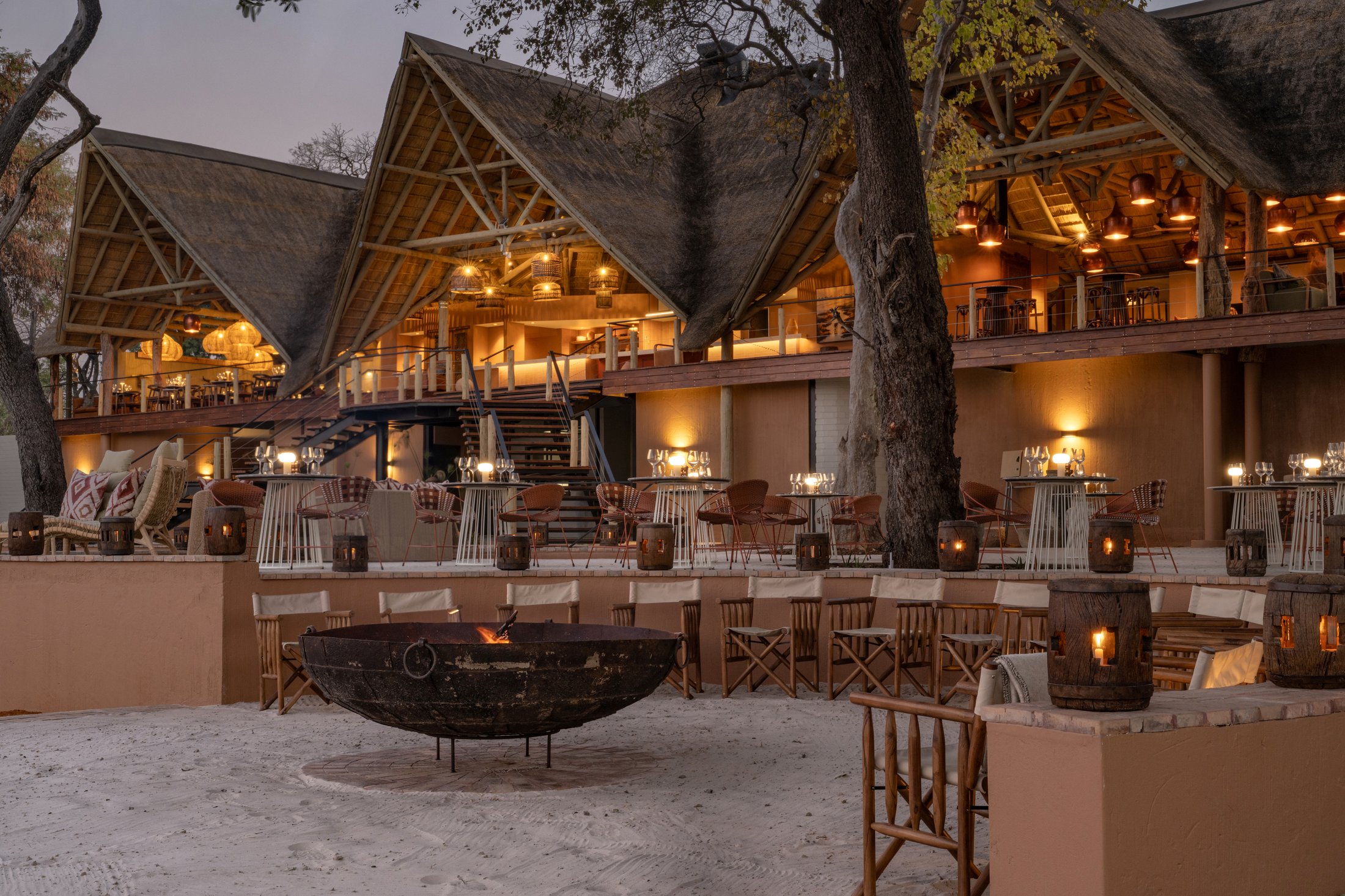
Thitaka is a tented camp of fifteen units set along the river: six Luxury Tents, three larger Luxury Bush Tents with their own kitchens and the option of a private chef, three Private Villa Tents with plunge pools, and three Family Tents. Every unit has a private deck, air conditioning, and both indoor and outdoor showers. A shared pool, restaurant and bar anchor the camp, along with a boma for evening dinners, a spa, and a craft shop stocked with beadwork and other pieces made locally. A large baobab stands at the entrance.

The main area’s high thatched roof shelters the lounge, dining room and bar behind steel-framed glass that opens the whole space onto the river; timber decking carries that same line out to the tents and down to the boma, where dinners move once the sun’s down.
Days run on two included game activities, by vehicle or boat, with river outings in the mornings when water levels allow, and walking safaris out with an armed ranger for guests who want to be on foot. Cooking draws on a kitchen garden on site and other local ingredients where they’re available. It’s Newmark’s first property in Namibia — part of a wider push by the group into the region alongside a new opening in South Africa the same year — and one of very few lodges anywhere on this stretch of the Kwando.
What it costs to live with elephants here
The wildlife recovery around Bwabwata isn’t something that happened to an empty landscape. About 5,500 people, mostly Khwe San, live inside the park under a multiple-use arrangement, farming small plots alongside the conservation and tourism economy — while elephants raid those fields and lion and leopard take livestock. The Kyaramacan Association, formed in 2004 to represent park residents, absorbs that cost: it employs community game guards and channels income from campsites and regulated trophy hunting into compensation for crop and livestock losses. It’s a genuine trade-off, not a clean success story — the hunting revenue sits uneasily next to a lodge selling wildlife photography down the road — but it’s also, on the numbers, the reason there’s still anything left to see.

Practicalities
Reach Thitaka either via Kasane, about 230 kilometres and roughly three hours away including the Botswana–Namibia border crossing and a drive through Chobe National Park, or via Katima Mulilo, about 90 kilometres and an hour’s transfer; the lodge also has its own airstrip for charter flights. The area is a malaria zone, and the lodge does not take children under 12, on stated safety grounds.

Thitaka opens on 1 October 2026 and is taking bookings now, via newmarkhotels.com/accommodation/thitaka-river-lodge; earlier opening dates that have circulated in some press coverage are out of date.
Sources
- Newmark Hotels & Reserves — Thitaka River Lodge fact sheet, supplied directly, 20 August 2026; newmarkhotels.com/accommodation/thitaka-river-lodge
- Newmark Hotels & Reserves — “Into the Wild: Toro River Lodge & Thitaka Lodge Join the Newmark Portfolio,” newmarkhotels.com
- Newmark Hotels & Reserves, official opening press release, via EIN Presswire
- Embassy of Namibia (France) — “Bwabwata National Park: People and Wildlife, a Shared History,” official park fact sheet
- Wikipedia — Bwabwata National Park
- Environmental Information Service Namibia (the-eis.com) — Bwabwata National Park, Kwando Core Area fact sheet
- Conservation Namibia — Namibia elephant numbers confirmed by regional aerial survey, 2023
Leave a Reply