Kidepo Valley is Uganda’s most remote park, and for a lot of people who make it up here, its best. It sits right in the far north-east corner, where Uganda runs into South Sudan and Kenya. Getting there takes a full day on the road or a light plane over a whole lot of nothing — and that’s exactly why it’s stayed so wild.
What you get for the effort: wide golden plains, mountains on every horizon, big herds of animals, and most days, not another car in sight. There’s also some genuinely big news to share — in 2026, after more than forty years, rhinos are back in Kidepo. If you’re after real wilderness with almost no crowds, this is the guide to read first.
🧭 Kidepo at a glance
- Where: far north-east Uganda, in Karamoja. The park borders South Sudan, and Kenya is just a few kilometres east.
- What: about 1,442 km² of dry savannah ringed by mountains. It’s Uganda’s northernmost national park — a game reserve since 1958, a national park since 1962.
- Why go: proper wilderness with hardly any other visitors, scenery a lot of people rank among the best in Africa, and animals you can’t see anywhere else in Uganda — cheetah, ostrich, bat-eared fox and more.
- Two valleys: the Narus Valley (south-west) has water year-round and is where the wildlife and the lodges are. The Kidepo Valley (north) is drier, with a big sandy river bed and the remote Kanangorok hot springs.
- Wildlife: four of the Big Five, plus rhino reintroduced in 2026. Huge buffalo herds, elephant, giraffe, zebra, and 470+ bird species.
- Best time: dry season, roughly September–March, for game viewing (Dec–Feb is driest but hot). April–August is green, quiet, and great for birds.
- Getting there: ~10-hour drive from Kampala (usually over two days), or about a 2-hour flight to the Apoka airstrip.
- Where to stay (featured): Kidepo Wilderness Lodge, a new lodge just outside the Kalokudo Gate with big views over the park.
Why Kidepo is different
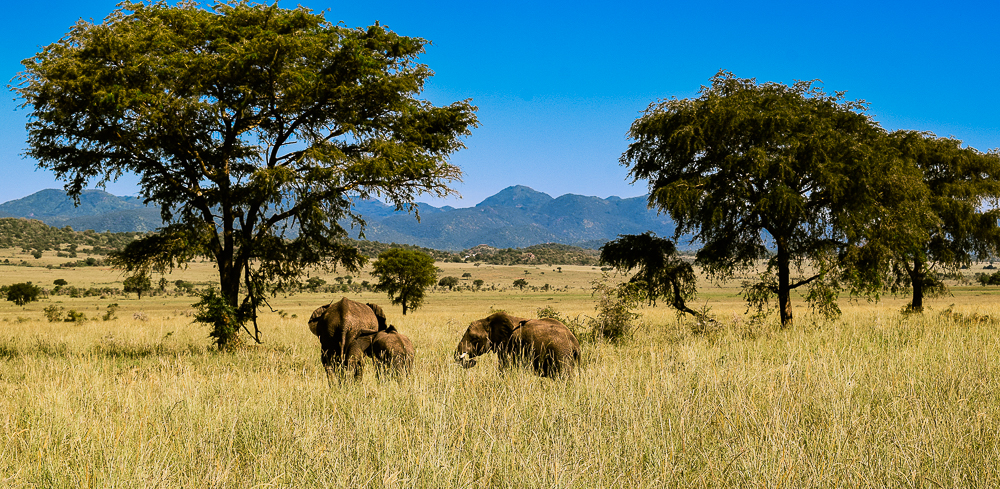
Most people picture Uganda as green and misty — gorillas, rainforest, mountains. Kidepo is the opposite. It’s open savannah, the kind you’d expect in Kenya or Tanzania: golden grass, palm trees, rocky outcrops, and mountains all the way around. People who’ve been keep saying it looks like the Serengeti or the Mara, just with peaks on every side and almost nobody there.
That emptiness is the best part. Kidepo is so far from everything that hardly anyone comes. You can drive all morning and not see another vehicle. As Barbara Baruka from Crystal Lodges (who run Kidepo Wilderness Lodge) puts it: “It’s entirely possible to spend hours exploring the park without encountering another vehicle.” For a lot of travellers, that’s the whole reason to come.
And then there’s the wildlife you can’t see anywhere else in the country. Kidepo is dry, northern country, so it has animals no other Ugandan park does — cheetah, ostrich, bat-eared fox, caracal, striped hyena, lesser kudu. More on those below.

The lay of the land
Kidepo is in Karamoja, the dry north-eastern corner of Uganda, in the Kaabong and Karenga districts. Its north-west edge is the South Sudan border; Kenya is a few kilometres east. At around 1,442 km² it’s a big park, and a varied one. The valley floors sit around 900–1,200 m, and the mountains climb much higher — Mount Morungole tops out at 2,749 m. Picture a wide bowl of grassland with mountains all around it.
It really comes down to two valleys, and the difference matters. The Narus Valley in the south-west is the greener one, and it holds water all year even when everything else dries up. That’s why the animals gather here, and why this is where you’ll do your game drives (and where the park HQ at Apoka is). The Kidepo Valley to the north is drier — a broad, sandy river bed that only runs briefly after rain. Way up north near the South Sudan border are the Kanangorok hot springs, wild and rarely visited.
The climate is hot and dry. Rain comes in one stretch, roughly April to August, and then it’s dry for months. January and February can hit close to 40°C in the day, cooler at night. This dry-and-wet rhythm is the whole show: as the land dries out, the animals crowd around the Narus Valley’s water, and the game viewing keeps getting better right through the dry season.

The people: Karamojong and Ik
Kidepo isn’t empty of people, and never was. Two groups call this country home, and both are worth knowing about.
The Karamojong are cattle people — herders whose whole world revolves around their animals, which are wealth, status and identity all in one. Around Kidepo the main group is the Dodoth. They live in manyattas: clusters of huts inside a thornbush fence, with the livestock kept safe in the middle. The culture is very much alive — bright cloth, beadwork, feathered headwear that shows a man’s standing, and a lot of song and dance. You can visit a homestead near the park, and the good ones are run by the community itself, on their terms, with the money going back to local people rather than being a show put on for tourists.
Up on the slopes of Mount Morungole live the Ik, one of Uganda’s smallest and most unusual groups — a few thousand people with their own language, unrelated to their Karamojong neighbours. They were once hunter-gatherers, and were pushed up into the mountains when the park was created. Visiting them means a tough full-day hike up Morungole with a ranger and a local guide — one of the most memorable things you can do here, and a rare bit of income for a very isolated community.

🦏 The big news: rhinos are back (2026)
For over forty years, Kidepo had a sad rhino story: the last wild rhinos in all of Uganda were seen right here, in the Narus Valley, in 1983, before poaching wiped them out. In March 2026 that changed. The Uganda Wildlife Authority and its partners began moving southern white rhinos from Ziwa Rhino Sanctuary into a protected part of the Narus Valley — the first rhinos in the wild in Kidepo, and in Uganda, since 1983 — starting with a small founder group, with eastern black rhinos planned in the coming years. It’s a huge moment for the park, and it puts the full Big Five back within reach. (Numbers are still growing as more animals are moved, so treat any exact figure as a snapshot.)

Back from the brink
The rhinos are the newest chapter in a longer comeback. Kidepo had a rough time late last century — the Amin years, insecurity across the north, and heavily armed cattle raiding left the park poorly protected. Poaching hit hard: rhino gone by 1983, wild dog and roan antelope lost, elephant and giraffe crashing. The park’s Rothschild’s giraffe dropped from more than 400 animals in the 1960s to just three by 1992.
Things turned around once security came back to the region from about 2006. With work from the wildlife authority and partners, the animals recovered. Those same giraffe, topped up with new animals from Kenya and Murchison Falls, were back to around 89 by 2022. Elephants bounced back. And in June 2023 came a real surprise — African wild dogs were photographed in the Narus Valley, the first confirmed sighting in Uganda in over forty years. Seen against all that, the 2026 rhino return isn’t a one-off. It’s the boldest step yet.

What you’ll actually see
Let’s be straight about Kidepo, because the people who love it come with the right expectations. The stars here are the big herds and the scenery. The predators are around, but they can be hard to find. Come for the space and the animals filling it, and the big cats become a nice bonus instead of a letdown.
The herds. The Narus Valley’s signature sight is buffalo — sometimes hundreds, occasionally over a thousand, moving across the plains together. With them you’ll find elephant, the tall Rothschild’s giraffe, zebra, hartebeest, eland (only found here and at Lake Mburo in Uganda), waterbuck, oribi, bushbuck and warthog. In the dry season the sheer number of animals in the Narus is the thing everyone remembers.

The predators. Lions are here — sometimes up on the rocky outcrops or near the buffalo — along with leopard and both spotted and striped hyena. Seeing them takes patience and a bit of luck; plenty of visitors have drives where the cats stay hidden. But Kidepo is also the only place in Uganda you can see cheetah, out hunting on the open plains.

The “only in Kidepo” list. This is the park’s real trump card. Because it’s dry, northern country, it has animals with no other home in Uganda: cheetah, bat-eared fox, caracal, aardwolf, striped hyena, lesser kudu, dik-dik and more. Add ostrich striding across the plains and it feels a lot more like northern Kenya than the rest of Uganda.
Birds
Kidepo is one of Uganda’s best birding parks — over 470 species, second only to Queen Elizabeth, and around sixty of them turn up in no other Ugandan park. The dry-country specials are the draw: ostrich, Kori bustard, Abyssinian ground hornbill, Abyssinian roller, secretary bird, Clapperton’s spurfowl, and the local Karamoja apalis, plus a serious lineup of raptors — more than fifty species. Birding is good year-round, but the wetter months, when things are breeding and migrants show up, are especially good.

When to go
Dry season (roughly September–March) is best for game viewing. As the months go without rain, the bush thins out and animals pack in around the Narus Valley’s water, so they’re easier to find. The driest stretch, December–February, has the best concentrations — but it’s also the hottest and dustiest, with hazy skies. Many people prefer September–November: good wildlife, thinner bush, clearer air.
Green season (April–August) is a different trip. The rains bring dramatic skies and green country, the park is at its emptiest, and the birding is at its best — but the animals spread out and get harder to find, and the dirt roads can turn muddy. Come now for scenery, birds and solitude rather than a big game count.
| Season | Months | Game viewing | Landscape | Watch for |
|---|---|---|---|---|
| Peak dry | Dec–Feb | ★★★★★ best | Golden, bare, dusty | Heat (up to ~40°C), haze |
| Early dry | Sep–Nov | ★★★★ very good | Drying, clearer air | Many people’s favourite window |
| Green / wet | Apr–Aug | ★★★ spread out | Lush, big skies | Muddy roads; best birding; fewest people |

Getting there
No way around it — Kidepo is far, and getting there is part of the trip.
By road. From Kampala it’s 570+ km and a solid 10 hours or more of driving, so almost everyone splits it over two days, usually with a night in Gulu or Kitgum (the route runs Kampala–Karuma–Gulu–Kitgum–Kidepo). Most of it is good tar now, with the last stretch on dirt that’s slow, and slower after rain. There’s also a longer eastern route through Karamoja via Mbale, Moroto and Kaabong — rougher, but scenic and good if you want a cultural loop. Plenty of people break the drive at Ziwa Rhino Sanctuary or Murchison Falls on the way up.
By air. The easy option is to fly. Scheduled and charter flights (mainly Aerolink Uganda) run from Entebbe or Kajjansi to the Apoka airstrip inside the park, turning a two-day drive into about two hours. It’s the priciest domestic hop in Uganda and schedules depend on the season and passenger numbers, but if you’re short on time it’s worth it.

Can you self-drive?
Yes — Kidepo works well as a self-drive if you’re set up for it, and independent travellers are some of its biggest fans. A few musts:
- Bring a proper 4×4 with good clearance, especially in the wet, when tracks cross streams and can get impassable.
- Sort fuel and supplies ahead. Fill up — and carry spare fuel — at the last real towns (Gulu or Kitgum on the west route, Kaabong on the east), and assume there’s nothing inside the park. Bring your own food, water and camping gear.
- A UWA ranger rides along on game drives (worth it — they know the tracks and the animals) and is required for anything on foot. Fees are cashless — card or mobile money.
- No driving at night in the park.
Don’t want the hassle? Lodges and operators can arrange drives and transfers. But self-drive is genuinely doable here, which isn’t the case at Uganda’s gorilla parks.
Park fees
Kidepo is run by the Uganda Wildlife Authority (UWA), so entry and activity fees follow the national rates. The rates below are the official UWA tariff for the current period (to mid-2026) and are per person — a new tariff is due, so double-check with UWA before you travel.
💵 Kidepo fees
| Item | Foreign non-resident | Foreign resident | East African |
|---|---|---|---|
| Park entry (24 hrs) | US$40 | US$30 | UGX 20,000 |
| Game drive (with ranger) | US$20 | US$15 | UGX 20,000 |
| Self-drive game drive | US$10 | — | UGX 10,000 |
| Night game drive | US$30 | US$20 | UGX 50,000 |
| Nature / bird walk | US$25 | US$20 | UGX 20,000 |
Vehicle, cultural-visit, hiking and camping fees also apply. Payment is cashless (card or mobile money).
Things to do
- Game drives in the Narus Valley — the main event, on the Kakine and Katurum tracks through the best wildlife country. Morning and afternoon; take a ranger.
- Kanangorok hot springs — a long drive north to the remote springs near the South Sudan border, more about the wild scenery than the wildlife.
- Guided walks — on foot with an armed ranger, from short strolls near Apoka to longer trails.
- Night drives — your best shot at nocturnal animals, including the cats.
- Karamojong cultural visit — community-run homestead visits near the park.
- Ik trek up Mount Morungole — a tough full-day hike to one of Uganda’s most isolated communities.
- Birding and hiking — the Lomej hills and Namamukweny Valley are good for birds and raptors.
How long, and what to pair it with
Give Kidepo a proper stay: two to three nights is the sweet spot — enough for the Narus Valley drives, a walk, a cultural visit and maybe the run up to the hot springs. One night doesn’t justify the distance.
Because it’s so far from Uganda’s south-west (the gorillas of Bwindi, the savannah of Queen Elizabeth), the easiest way to combine Kidepo with the rest of a trip is by air. On an overland trip it pairs naturally with Murchison Falls on the way north, and with a Karamoja cultural leg through Moroto. Fly-in travellers can string Kidepo together with Murchison, Kibale, Queen Elizabeth and Bwindi using domestic flights.
Good to know
- Plan the journey in. Whether you drive (two days, overnight in Gulu or Kitgum) or fly (two hours), sort it early — this isn’t a spur-of-the-moment add-on.
- Come in the dry season for wildlife (best Sept–Feb); come green season for birds, quiet and big skies.
- Keep your wildlife expectations honest. It’s about herds, space and scenery — treat cheetah and the other cats as a bonus.
- It’s a malaria area — take your antimalarials, cover up at dusk, use repellent.
- Be ready for heat and distance — carry water and sun protection, and get travel insurance with medical evacuation cover; the nearest hospitals are far.
- On safety: the park itself is patrolled and fine for visitors. Wider Karamoja has a history of cattle raiding, so travel by day, follow local advice, and check your government’s travel guidance before you go.
- Double-check fees, flights and road conditions close to travel — they all change.
The bottom line
Kidepo asks more of you than most Ugandan parks — a long trip, some heat, and the sense to come for the whole experience rather than a guaranteed checklist of cats. In return you get real wilderness, on a big scale, pretty much to yourself, in country a lot of people call one of the most beautiful in Africa. And with rhinos back on the plains for the first time in over forty years, there’s never been a better reason to make the trip north.

Where to stay at Kidepo
Getting to Kidepo is a mission, so where you land at the end of it matters. Here are the lodges we feature so far, with more to come.
Kidepo Wilderness Lodge
Opened in February 2026 and run by Crystal Lodges Uganda, Kidepo Wilderness Lodge sits on a hillside just 500 m from the Kalokudo Gate, with wide-open views across the savannah to the mountains. It’s built to sit lightly in the landscape — sixteen roomy semi-tented rooms and family units, each with its own veranda and 24-hour hot water, plus two family tents, a pool looking out over the park, and a spa. It’s full board and can set up everything you’d come for — game drives, guided walks, birding and Karamojong cultural visits — which makes it a natural base for two or three nights. As Barbara Baruka of Crystal Lodges puts it: “Kidepo offers something increasingly rare in Africa: space, silence, and the feeling that you’ve reached one of the continent’s last true frontiers.”
More info about Kidepo Wilderness Lodge →


Mara Safari Lodge Kidepo
Mara Safari Lodge Kidepo is perched with panoramic views over the savannah, an independent, family-run lodge blending eco-friendly comfort with the feeling of being properly out in the wild. Guests rate the hospitality and the locally inspired food, and the views over the plains don’t hurt either.
More info about Mara Safari Lodge Kidepo →


Apoka
Apoka is the only full-service lodge inside Kidepo Valley National Park itself, perched on a rocky outcrop above the Narus Valley with no fences between camp and the wildlife that wanders through. Its ten canvas-walled chalets each have a private veranda and a deep outdoor rock tub, so you can watch lion, leopard and cheetah without leaving your suite — then cool off in the rock-carved pool or eat in the private dining tower, with nothing but open sky and wilderness around you.


