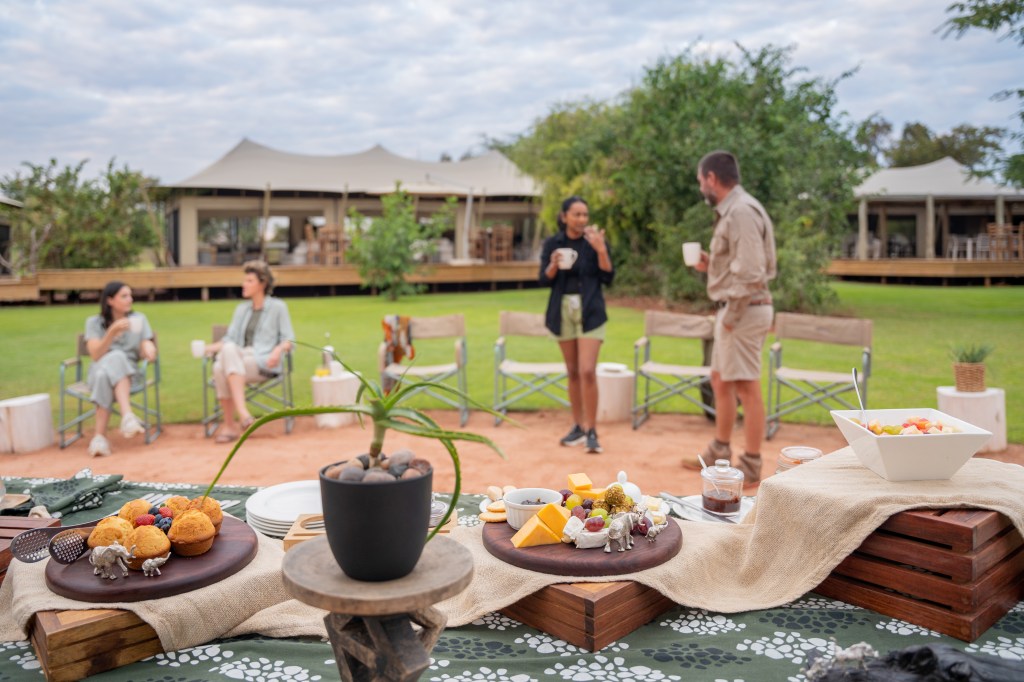
Photo: courtesy of Fothergill Island
There is a particular kind of safari lodge that earns its name rather than borrows it, and Fothergill Island is one of them. It sits on the shores of Lake Kariba, inside Matusadona National Park in Zimbabwe, and it’s named after a man who spent five years up to his waist in floodwater, saving the animals that would eventually make this stretch of shoreline one of the great wildlife-watching destinations in Southern Africa. Understanding that story is the key to understanding why a stay here feels different — this isn’t just a beautiful camp on a beautiful lake, it’s a place built, quite literally, on an act of rescue.
The lake that shouldn’t exist
To get to Fothergill, you first have to get your head around Lake Kariba, because almost nothing about it is natural. In the late 1950s, engineers threw a dam across the Kariba Gorge on the Zambezi River, and between 1958 and 1963 the water backed up behind it and swallowed the valley whole. What emerged is, by volume, the largest reservoir ever built by human hands — over 220 kilometres long, up to 40 kilometres wide, more than 5,500 square kilometres of open water pinned between Zimbabwe and Zambia. It holds four times as much water as the Three Gorges Dam.
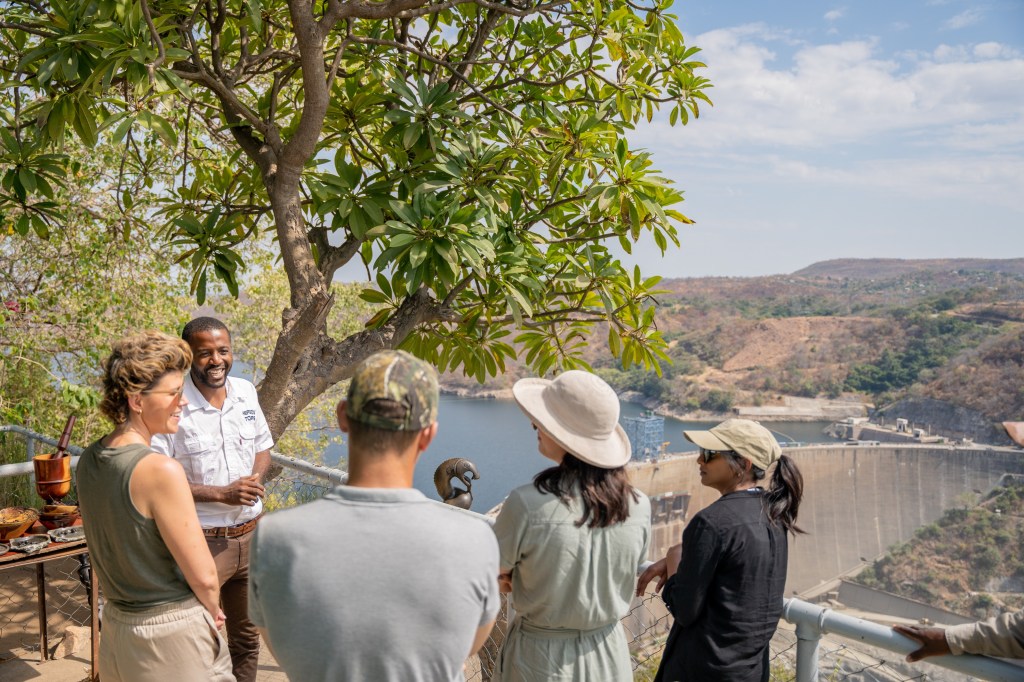
That’s an almost absurd scale to hold in your head while you’re sitting on a lodge deck at sunset, watching the light go copper over the water and a fish eagle call from a dead tree offshore. But it explains everything you see: the drowned forests of bleached, leafless trunks still standing out in the shallows, the open horizon that makes Kariba feel more like a sea than a lake, and the astonishing amount of wildlife that now lives along its shore.
Operation Noah: the rescue that named the island
When the valley began to flood, it wasn’t just villages and farmland going under — it was the entire resident wildlife population of the Zambezi Valley, with nowhere to go as the water rose around them. Rhodesia’s chief game ranger, Rupert Fothergill, led the response: a five-year effort, from 1958 to 1964, that came to be known as Operation Noah.
It was not a high-tech operation. Fothergill and a team of around sixty wardens worked from small boats with little more than nets, ropes improvised from nylon stockings, and sacks, wading and swimming and hauling stranded, exhausted, sometimes furious animals to safety as the islands they were stranded on shrank by the day. Over five years they rescued more than 6,000 animals — elephant, rhino, lion, leopard, warthog, antelope of every kind, snakes, birds — and relocated the great majority of them to what would become Matusadona National Park, on the lake’s southern shore.
It is one of the largest coordinated wildlife rescues in history, and it is the reason Matusadona has the wildlife density it does today. Fothergill Island, the low, wooded rise where the lodge now stands, was named for him — and the current custodians of the property, working in partnership with African Parks and the Matusadona Conservation Trust, describe their mission in a way that would have made sense to him: protect the wildlife, restore the land, and hold the island in trust for the generations that come after.
Matusadona National Park: wild, remote, and coming back
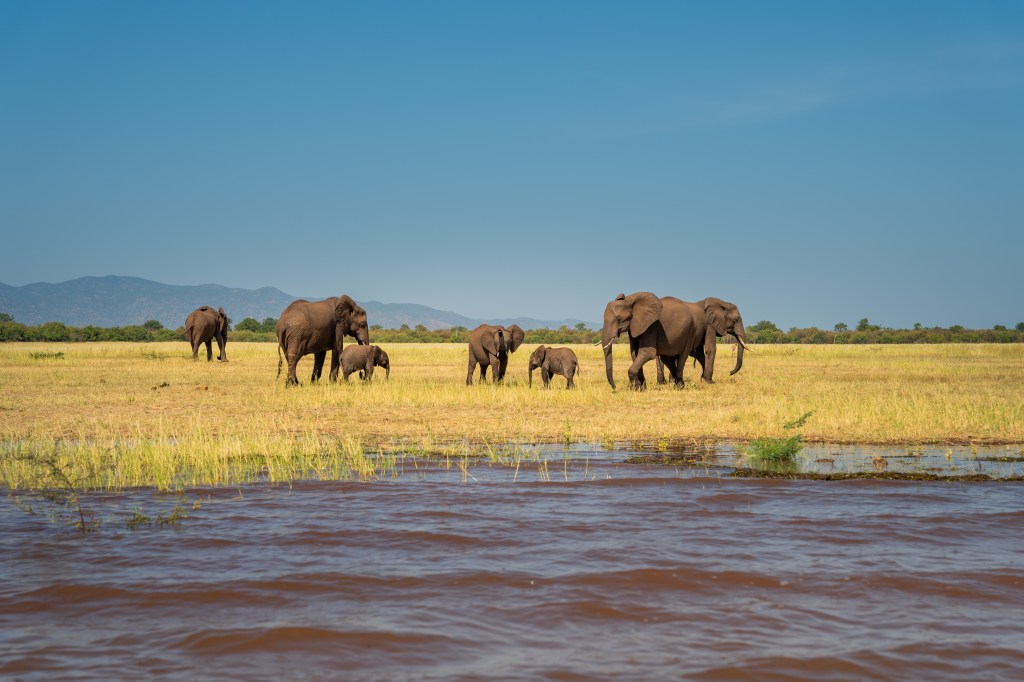
Matusadona itself covers about 1,400 square kilometres along Kariba’s southern shore, named for the Matuzviadonha (“few dry bones”) hills that rise dramatically along its escarpment. It’s a park of three distinct faces: open lakeshore grassland where elephant and buffalo graze right down to the water’s edge, thick valley-floor woodland behind it, and — inland — an escarpment climbing 700 metres into miombo woodland, wild and largely trackless.
It became a non-hunting area in 1958 (the same year the flooding began), a game reserve in 1963, and a full national park in 1975. Like much of Zimbabwe’s park network, it went through hard years of under-resourcing and poaching pressure — which is why, in 2019, African Parks stepped in to co-manage the park alongside the Zimbabwe Parks and Wildlife Management Authority, rebuilding ranger capacity and reversing the decline. Black rhino have been reintroduced under an Intensive Protection Zone, lion and leopard hold territories along the escarpment and shoreline, and elephant and buffalo move through in numbers that make Matusadona one of the most reliable big-game destinations on the lake.
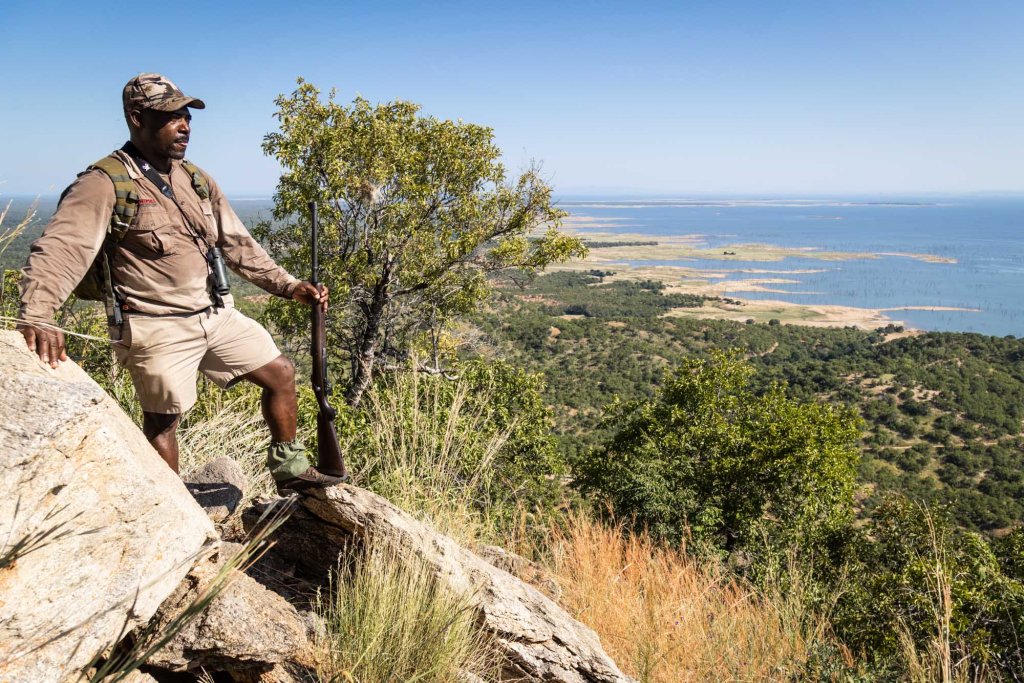
It’s also, refreshingly, hard to get to — no tar road reaches it, and in the wet season it’s effectively cut off by land altogether. Most visitors arrive as Fothergill’s guests do: by light aircraft to a bush airstrip, or by boat across the lake. That remoteness is precisely what keeps it wild.
Getting There
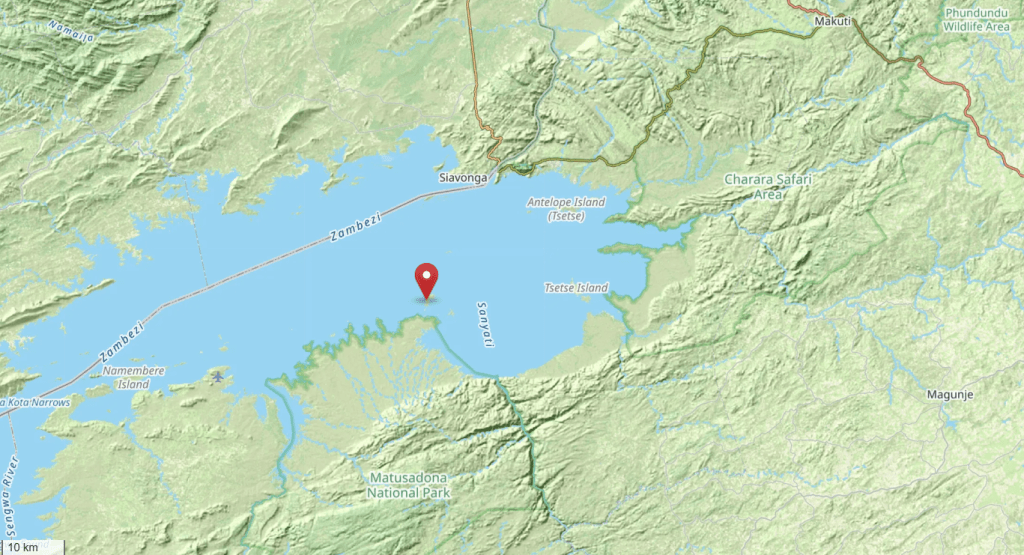
Fothergill sits on its own low, wooded rise near the mouth of the Sanyati River, on Kariba’s southern shore — genuinely cut off from the road network, which is very much the point. Guests arrive almost exclusively by air or water. The camp has its own private airstrip, a five-minute transfer from your suite, reachable by light aircraft from Victoria Falls International Airport (about 1 hour 40 minutes), Harare (about 1 hour), Hwange (about 1 hour 30 minutes), or Mana Pools (about 30 minutes). Mack Air runs scheduled seat-rate flights linking Hwange, Kariba and Mana Pools through the safari season, and private charters can be arranged on any of these routes.
If you’d rather fly commercially into Kariba town’s airport, the lodge arranges a scenic 45-minute boat transfer across the lake to camp instead — arguably the most memorable way to arrive, watching the shoreline and the Matusadona escarpment unfold as you go. Either way, Fothergill’s reservations team coordinates all flight and transfer bookings once your stay is confirmed.
The Lodge
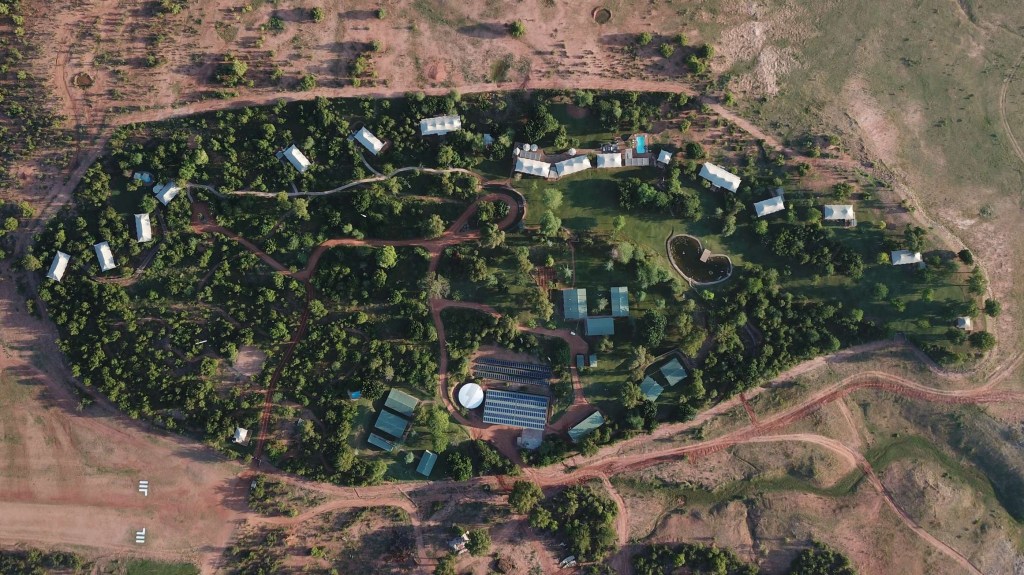
Fothergill’s camp is built for a slow, unhurried kind of safari, spread out under mopane woodland and along the lakeshore in three tiers of accommodation.
The Lake Suites are the heart of the camp — five bright double or twin tented suites, set either in the shade of the mopane forest or right along the lakeshore, each with a private outdoor deck, its own plunge pool, and a hanging daybed made for long, do-nothing afternoons.

The Family Suites are two two-bedroom units connected by a shared entryway, each with its own ensuite bathrooms and a shared deck and plunge pool — built for families who want both privacy and togetherness in the same stay.
The Island Suites are the most exclusive tier: three double or twin suites in a more secluded pocket of the property, sharing a private living and dining area and their own pool and outdoor lounge — ideal for a smaller group wanting real seclusion, or for larger parties who take them alongside the Lake Suites.

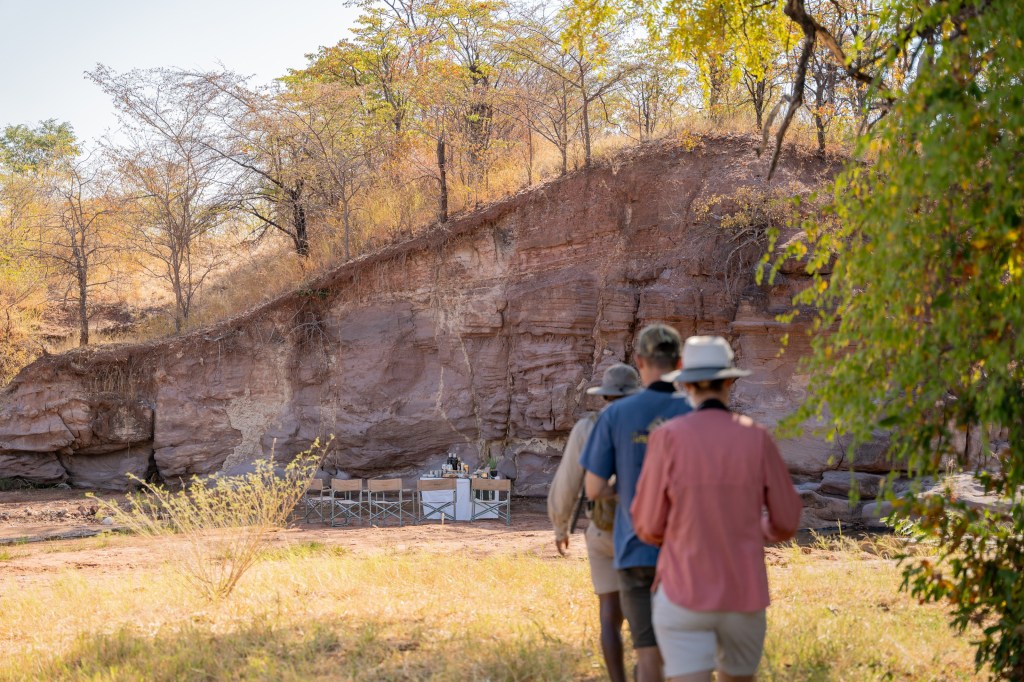
Food at Fothergill is treated as a genuine part of the experience rather than an afterthought — the brochure calls it “the pinnacle of Zimbabwean cuisine,” and the photographs back that up: riverbed brunches laid out in the open bush, candlelit dinners on a floating deck over a lily pond, high tea, family lunches on the lawn.
What you’ll do
Fothergill’s location — half inside a wild national park, half on the shore of an inland sea — gives it an unusually wide activity list for a camp this size.
Game drives and guided walking safaris cover Matusadona’s lakeshore plains and woodland, where elephant, buffalo, lion, leopard and zebra are all resident. Boating safaris head out onto Kariba itself and into the towering Sanyati Gorge, a hidden, cliff-walled stretch of water thick with birdlife.
Fishing is a serious draw here — the lake’s gorges, bays and flooded forests hold hard-fighting tiger fish and the genuinely enormous vundu catfish, alongside tilapia, and the camp caters equally to seasoned anglers and first-timers. A Kariba town tour takes in the dam wall itself and the human history behind it — including the story of Fothergill’s own rescue effort. And for something lower-key, there’s archery, a pool, a small gym, and the ritual that closes every day here regardless of what else you’ve done: sundowners on the water as the sun drops behind the escarpment.

Why it matters
Plenty of lodges sell “wilderness.” Fothergill sells something more specific: a wilderness that exists, in a very direct and traceable way, because a small team of people once refused to let it drown. Every elephant you watch drinking at the shoreline, every fish eagle you hear calling across the bay, is there because of Operation Noah — and staying here, under a name chosen deliberately to honour that story, is as close as a safari gets to visiting the place where a conservation legend actually happened.
Practical information
- Location: On a low, wooded rise near the mouth of the Sanyati River, Matusadona National Park, Lake Kariba’s southern shore, Zimbabwe.
- Getting there: By light aircraft to the camp’s private airstrip (from Victoria Falls, Harare, Hwange or Mana Pools), or a scenic 45-minute boat transfer from Kariba town’s airport.
- Accommodation: Five Lake Suites, two two-bedroom Family Suites, and three Island Suites — each with a private deck and plunge pool.
- Facilities: Swimming pool, small gym, archery range.
- Signature activities: Game drives and guided walking safaris, boating safaris into the Sanyati Gorge, tiger fish and vundu catfish angling, a Kariba town and dam wall tour, sundowner cruises.
- Booking & contact: fothergill.travel · res1@fothergill.travel.
Explore more on 25South
- Matusadona & Lake Kariba destination profile — more camps and lodges along this stretch of shoreline.
Last update: 08/05
 25South